In brief
Atmosphere is what you feel on entering a space, but that feeling does not form by accident. In this article we explain, in short and practical principles, how to build a consistent atmosphere with reed, woven mat and bamboo by limiting the number of materials, using repetition and scale, balancing natural and processed material and putting the user at the center. The notes offer a general frame; the scope for each space becomes clear at the survey according to its own conditions. The images on the site are architectural concepts. We kept it short: each section answers one question, and a three-question FAQ closes the article.
Atmosphere comes from an attitude, not a list
What makes a space memorable is not one piece of furniture or one surface but all parts coming together with the same attitude. When building atmosphere with natural material, first say what feeling you want: calm, lively, exotic, simple? Material choice comes after that answer.
The same reed roof can be a modern accent in plain architecture and a dense texture in a rich decor. Context changes what a material means.
Few materials, much repetition
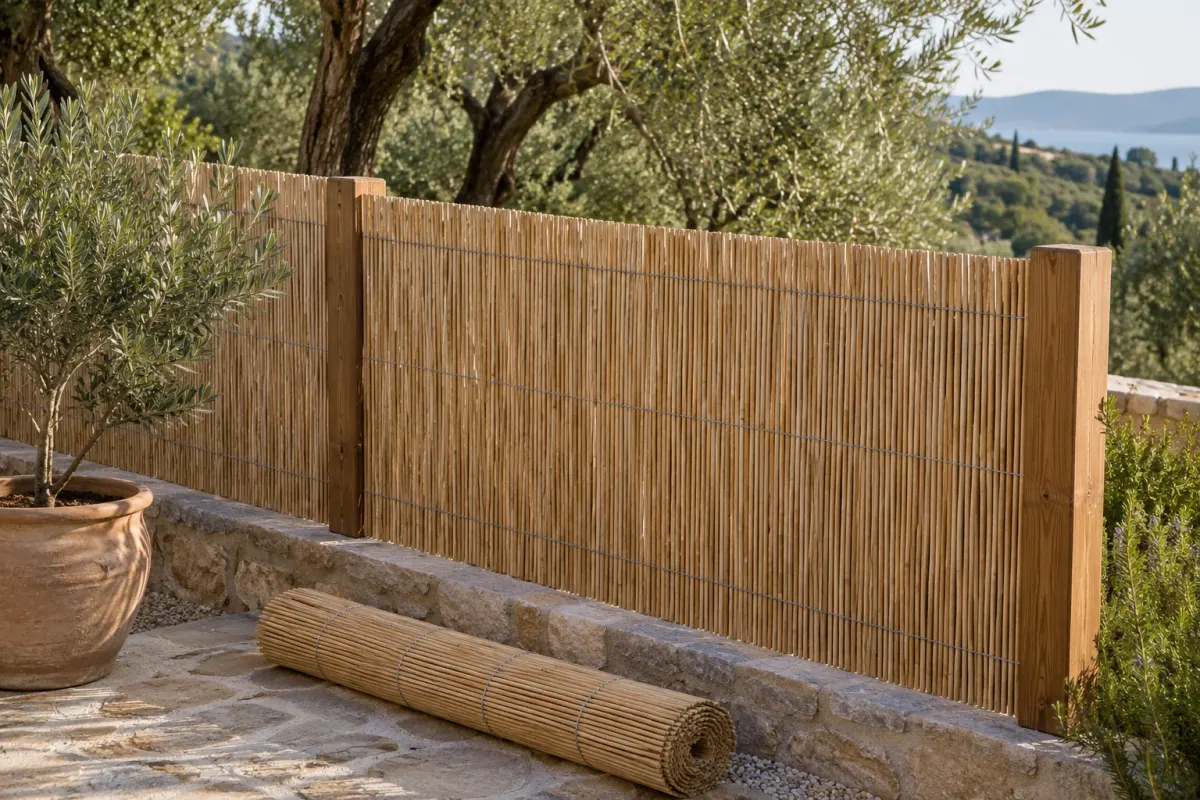
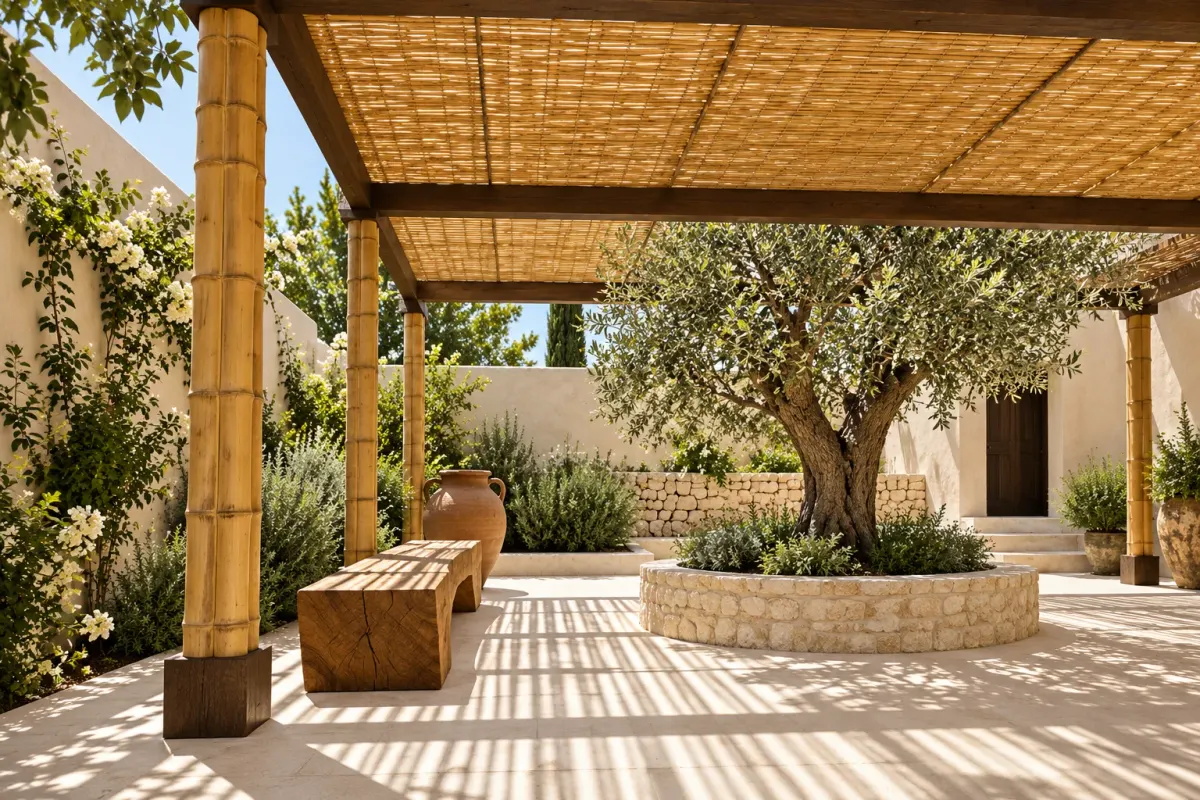
Choosing three or four materials and repeating them at different scales strengthens atmosphere. A reed roof outside, a woven mat ceiling inside and a bamboo fence at dividers gives the space a shared language. Trying a different material on every surface creates clutter.
Repetition builds rhythm, and rhythm helps people relax in a space.
Scale and balance
Large and small
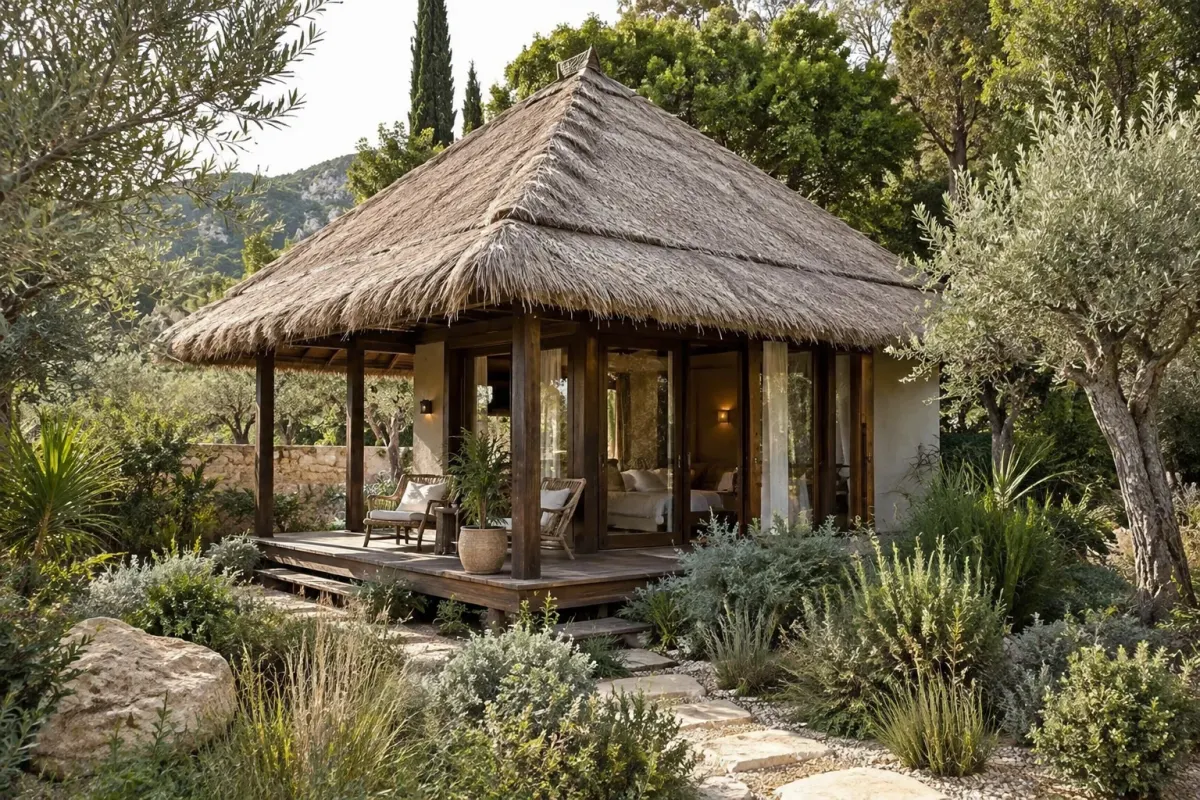
A large reed roof builds a strong silhouette; a small bamboo detail or woven mat niche beside it softens the scale. Large and small together add depth to a space.
Natural and processed
Balancing natural surfaces with processed materials such as stone, metal or glass keeps a space from turning into a theme park. The aim is a livable environment, not a stage set.
Collect references, then edit
It helps to begin atmosphere work with a reference board: colours, textures, photos of light, places you like. But editing the board matters as much as filling it. The elements that repeat on the board show what you actually want. Those that do not repeat and stay inconsistent often remain mere ornament.
When you share references with us, also write what you like and what you do not. Which material suits which area becomes clear much faster with this open talk. Remember also that the images on the site are architectural concepts; they give a starting idea, not a commitment to a project.
Do not forget the user
The test of atmosphere is how people behave in the space. Seating height, circulation width and the position of shade decide comfort. A space that looks good but is impractical loses interest quickly. So test design decisions against usage scenarios.
To tell the story of your space, use the survey and consultancy step and create a quote request.
Frequently asked questions
Can reed, woven mat and bamboo be used together?
Yes. For harmony it is enough to consider the tone and texture density of all three together and decide from the start which leads and which supports.
Does natural material suit a modern space?
Used with simple lines, natural texture can be an accent that adds warmth to a modern space. Balance comes from scale and quantity.
Where should I begin when building atmosphere?
First write down the feeling you want and the intended use; then start a survey with photos of the space.