 Space notes
Small terrace layouts: building a natural corner in little space
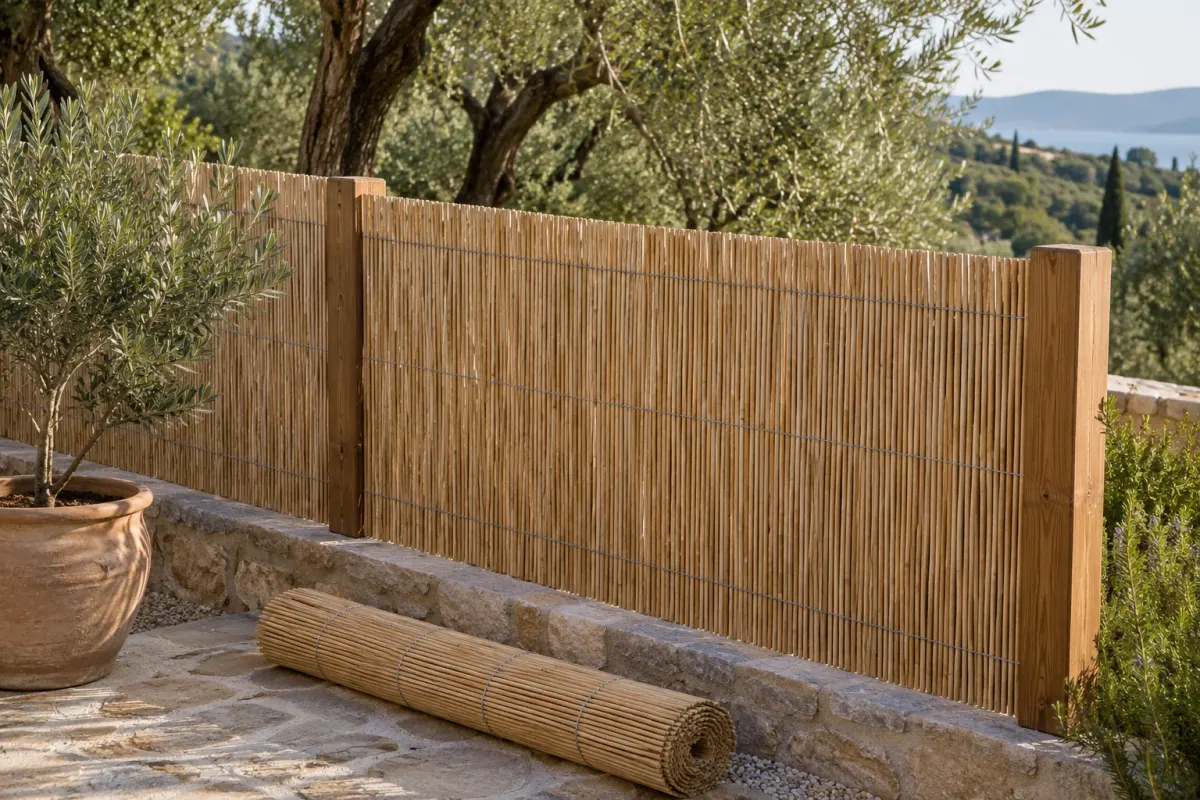
On a small terrace the aim is not to fit everything but to make the right three decisions about shade, privacy and seating.
Take a closer look at the material. Find ideas for your space. Notes on thatch, matting and bamboo.
Space notesOn a small terrace the aim is not to fit everything but to make the right three decisions about shade, privacy and seating.
 Space notes
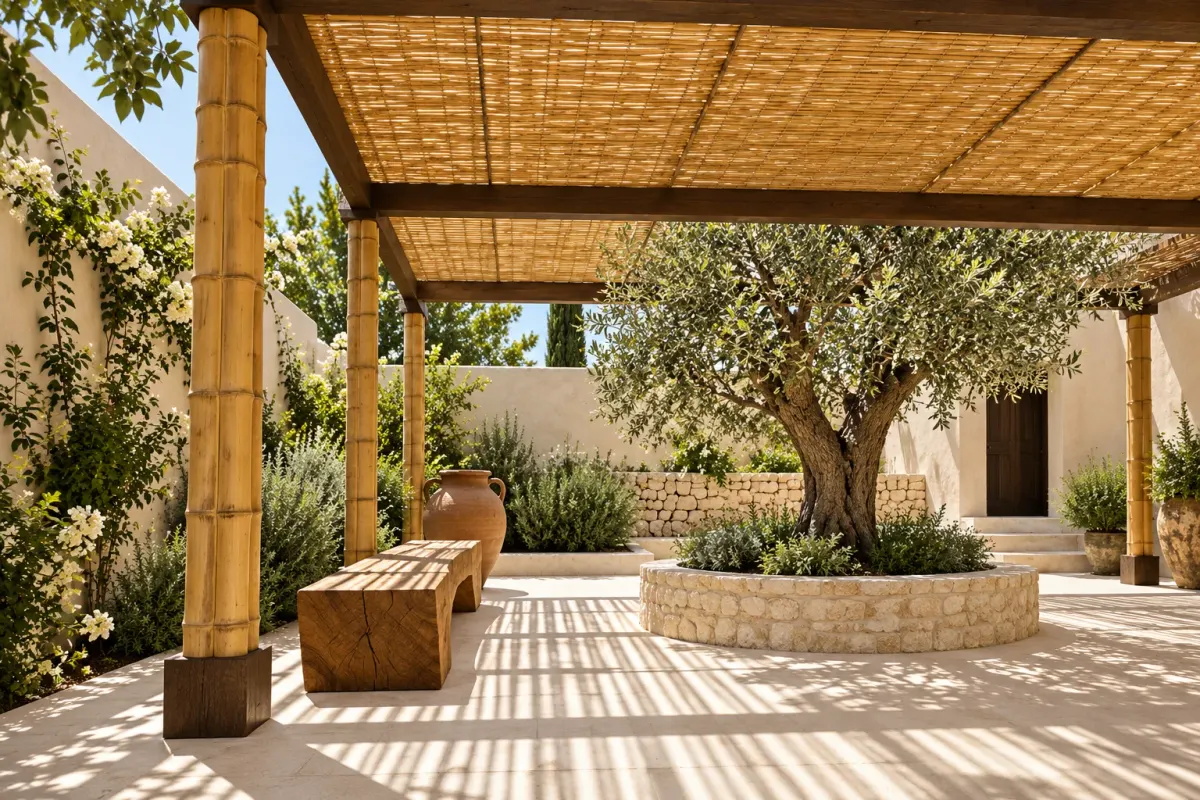
Atmosphere comes not from a single material but from the relationship materials build with each other, with light and with the user.
 Space notes
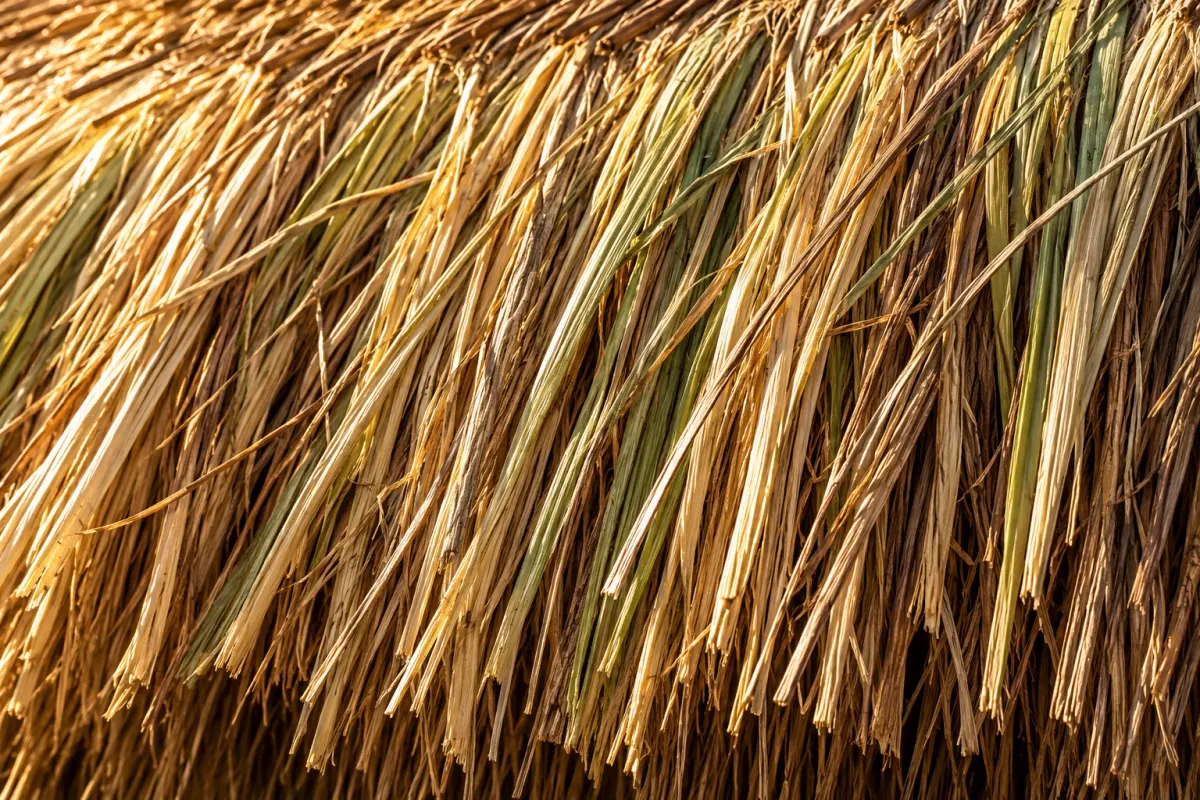
The best part of natural material is how it changes with light through the day; you can make that change part of the design.
 Space notes
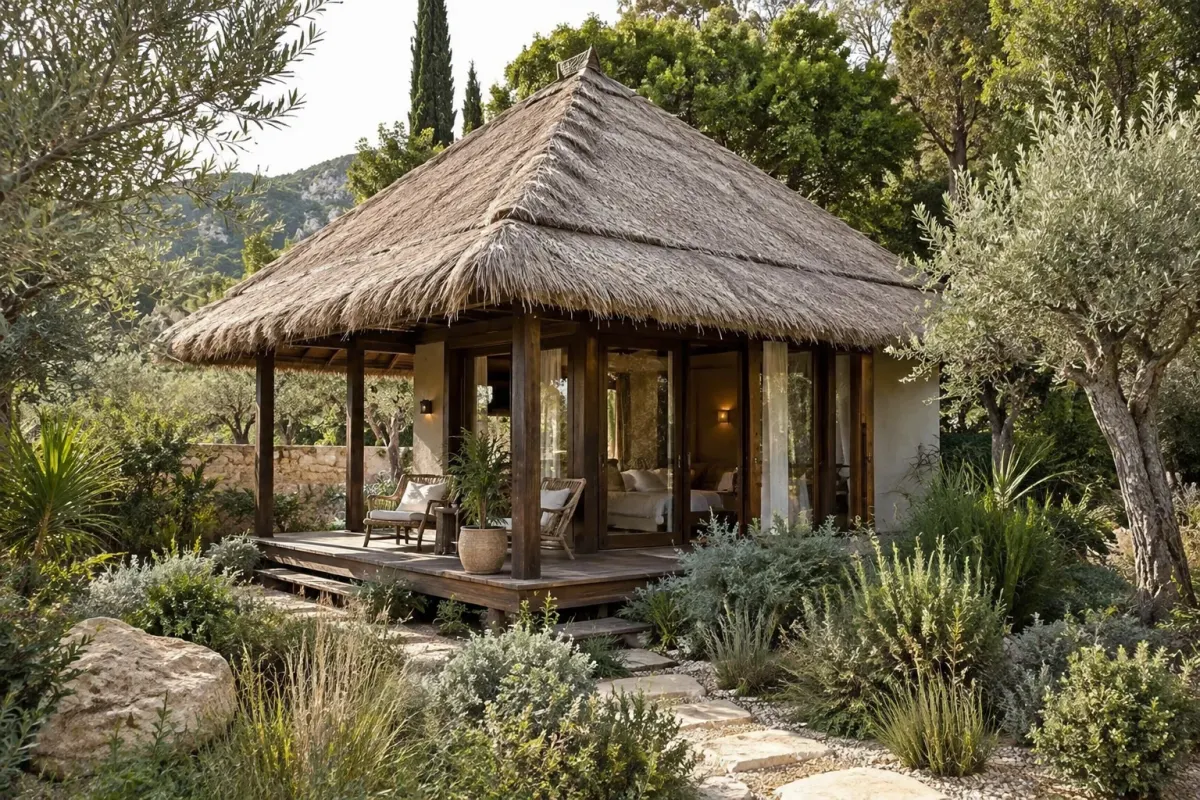
A freestanding shade structure can be both a resting point and the focal point of a garden.
 Space notes
A good shade structure takes into account the sun's movement through the day, the wind and the height of a person together.
 Space notes
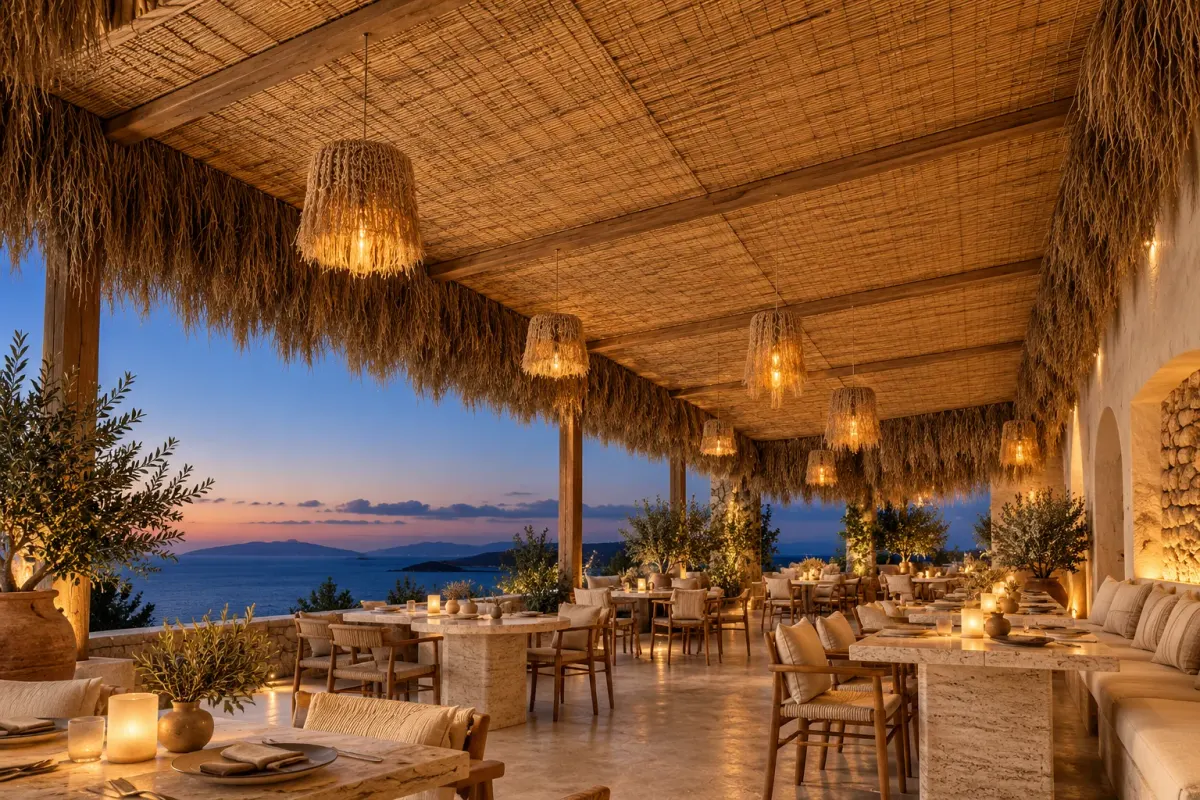
In a cafe, people choose the feeling before the coffee; natural texture carries that feeling from ceiling to wall.
 Space notes
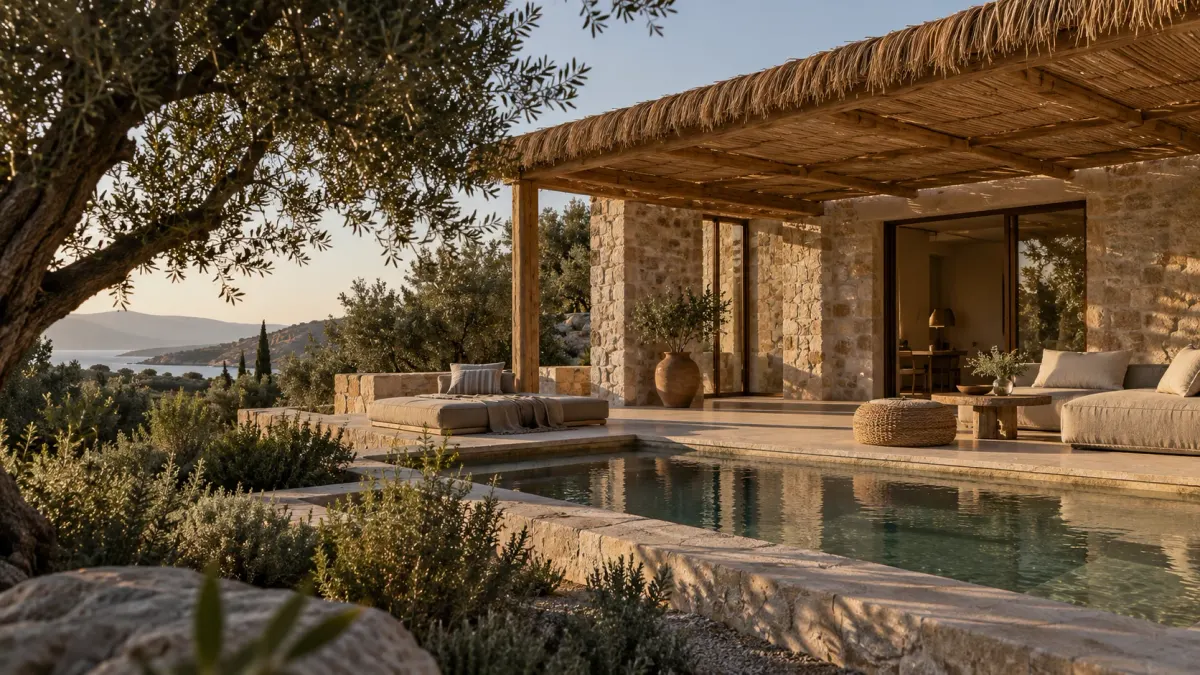
A villa garden is not decor but an extension of daily life; shade, privacy and texture shape that life.
 Space notes
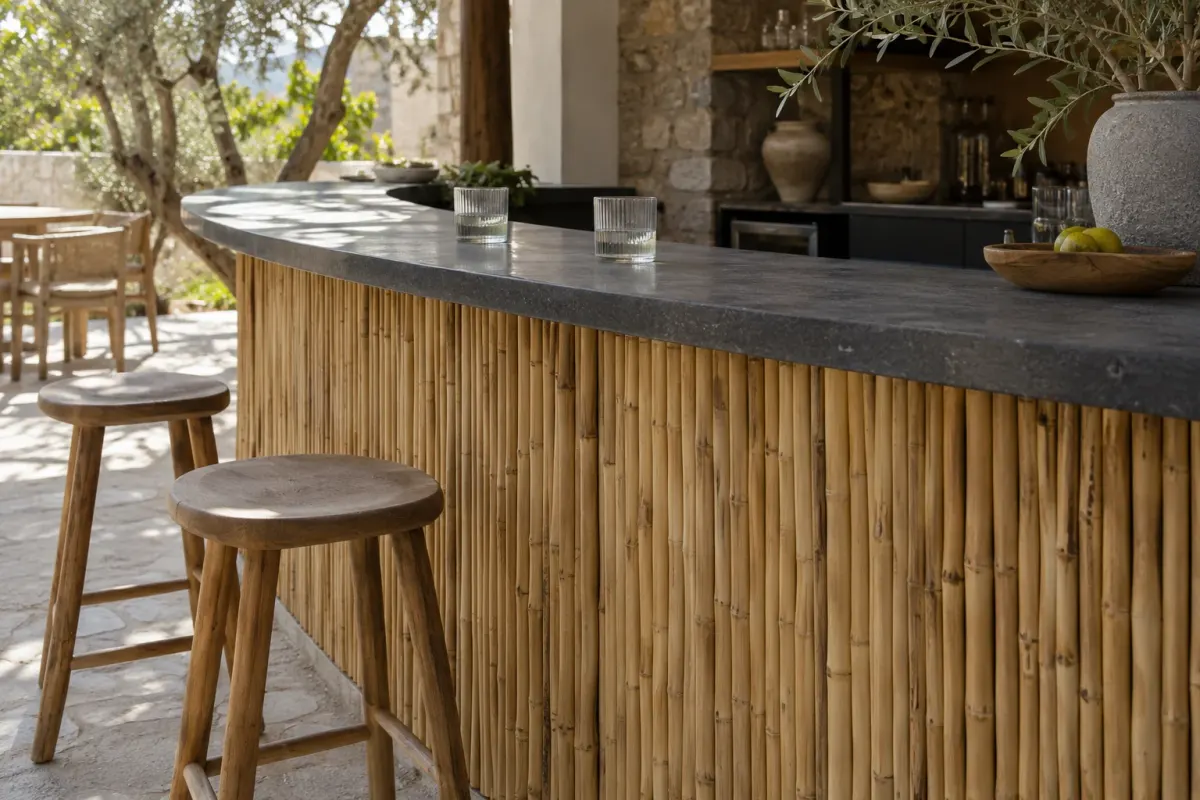
The front of a bar is one of the most looked-at vertical surfaces in a venue, and the material you choose sets the atmosphere directly.
 Space notes
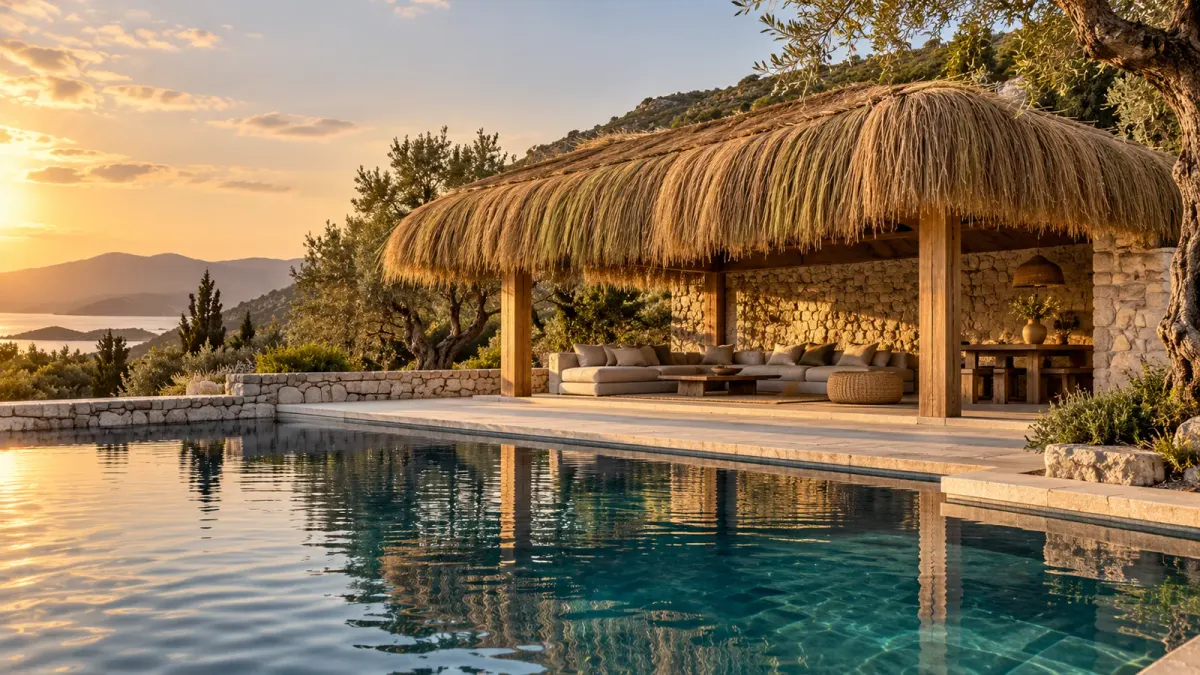
At the pool, shade is not just coolness; it also balances seating, circulation and the view.
 Space notes
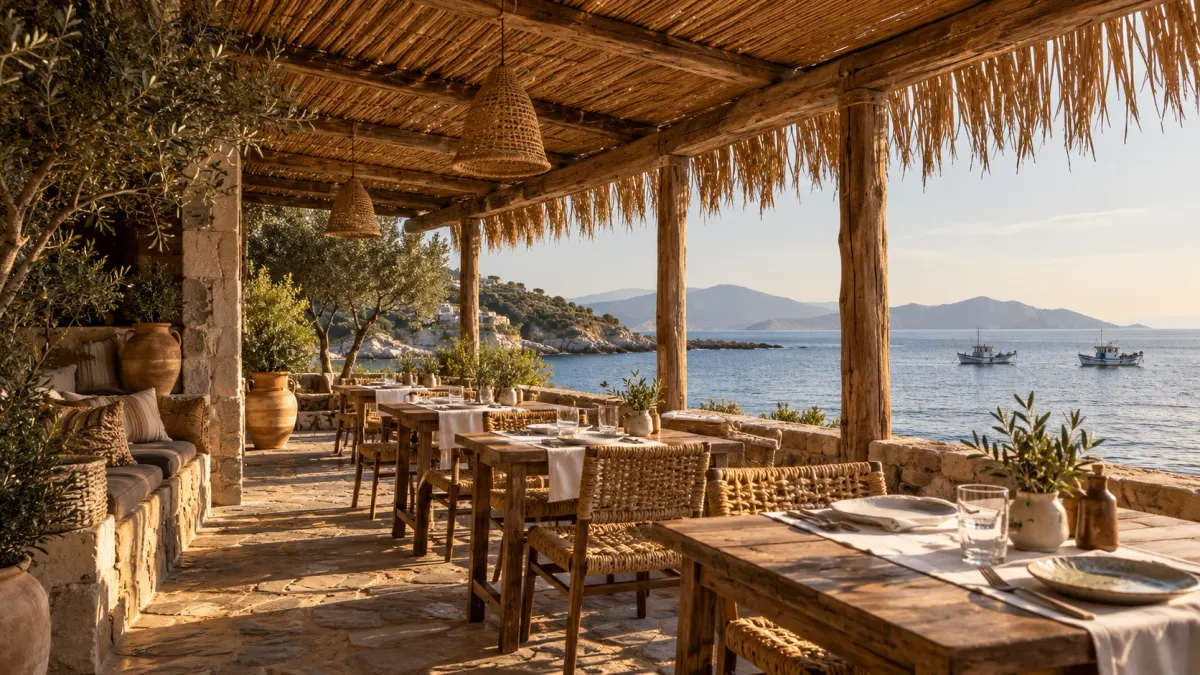
In a place where people dine outdoors, shade, table spacing and ceiling texture are as much part of the experience as the plate.
 Space notes
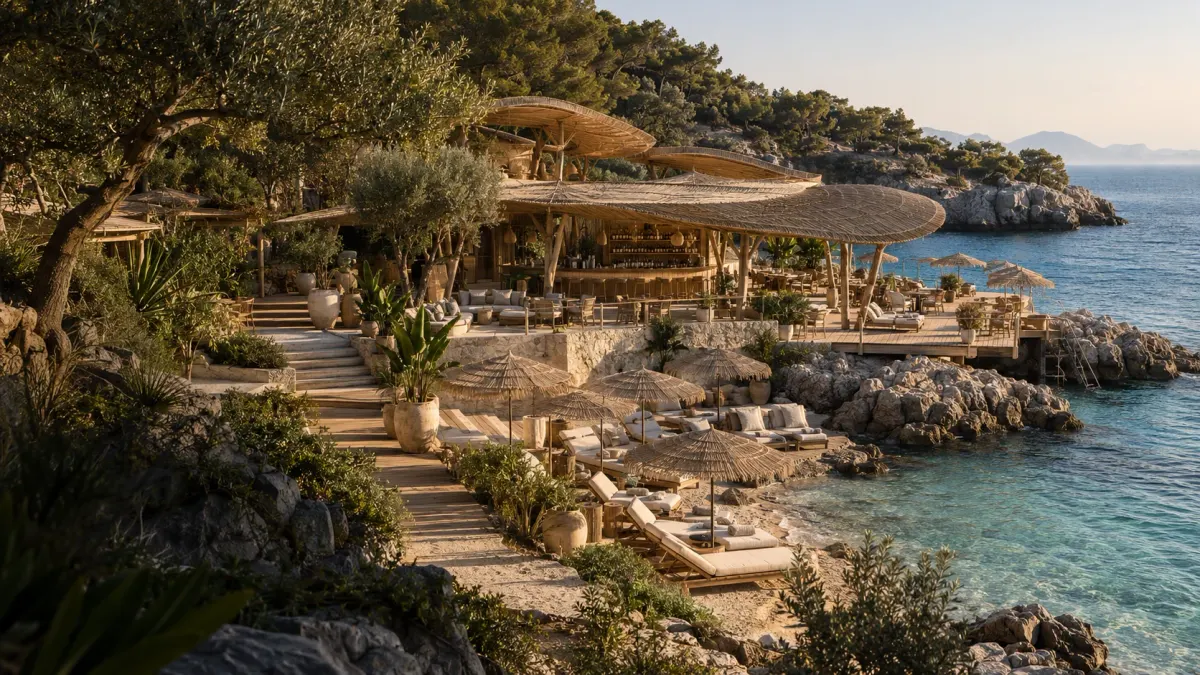
In a large property, natural material connects not individual corners but the whole route a guest walks.
 Space notes
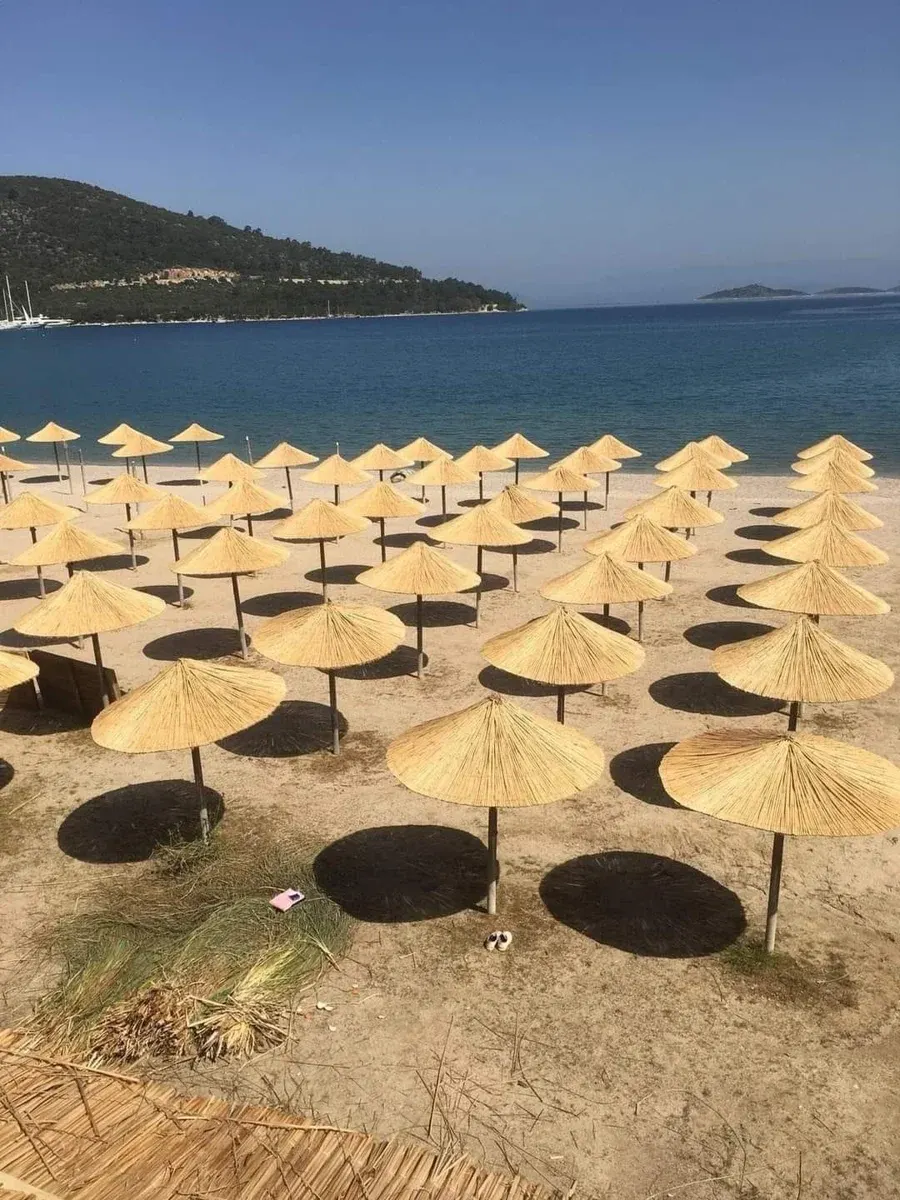
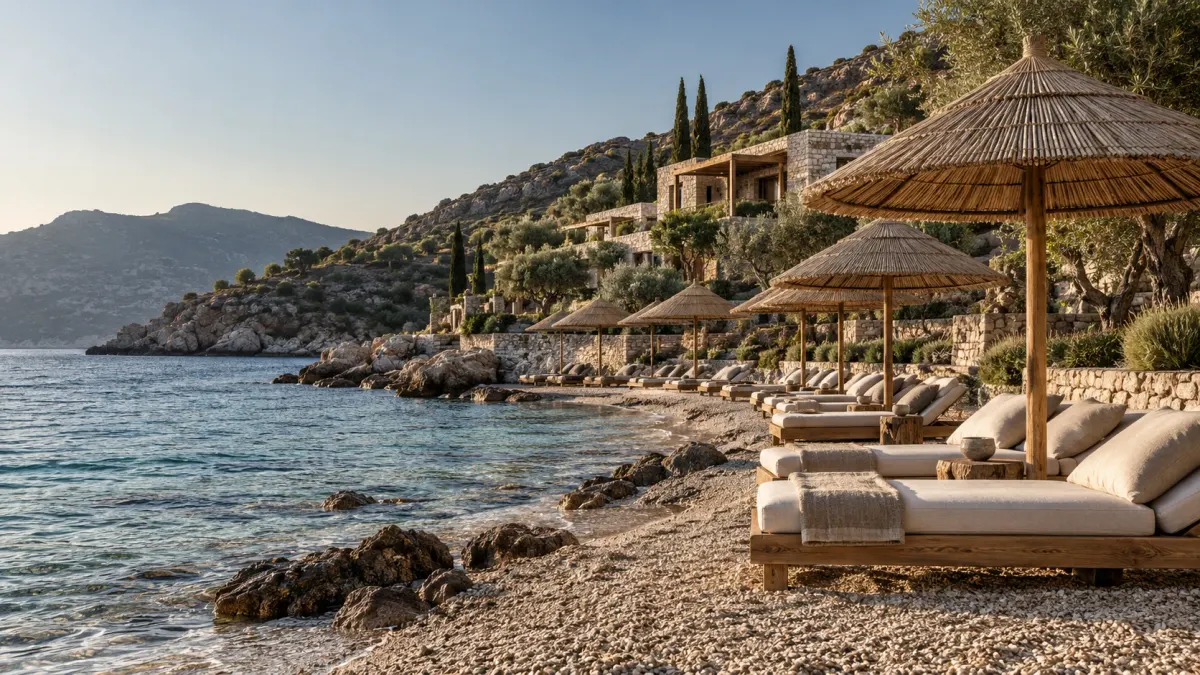
On the shore, a good layout depends less on the number of umbrellas than on how paths, gaps and service flow are set up.
 Space notes
The placement of a parasol determines far more than just where its shade falls.
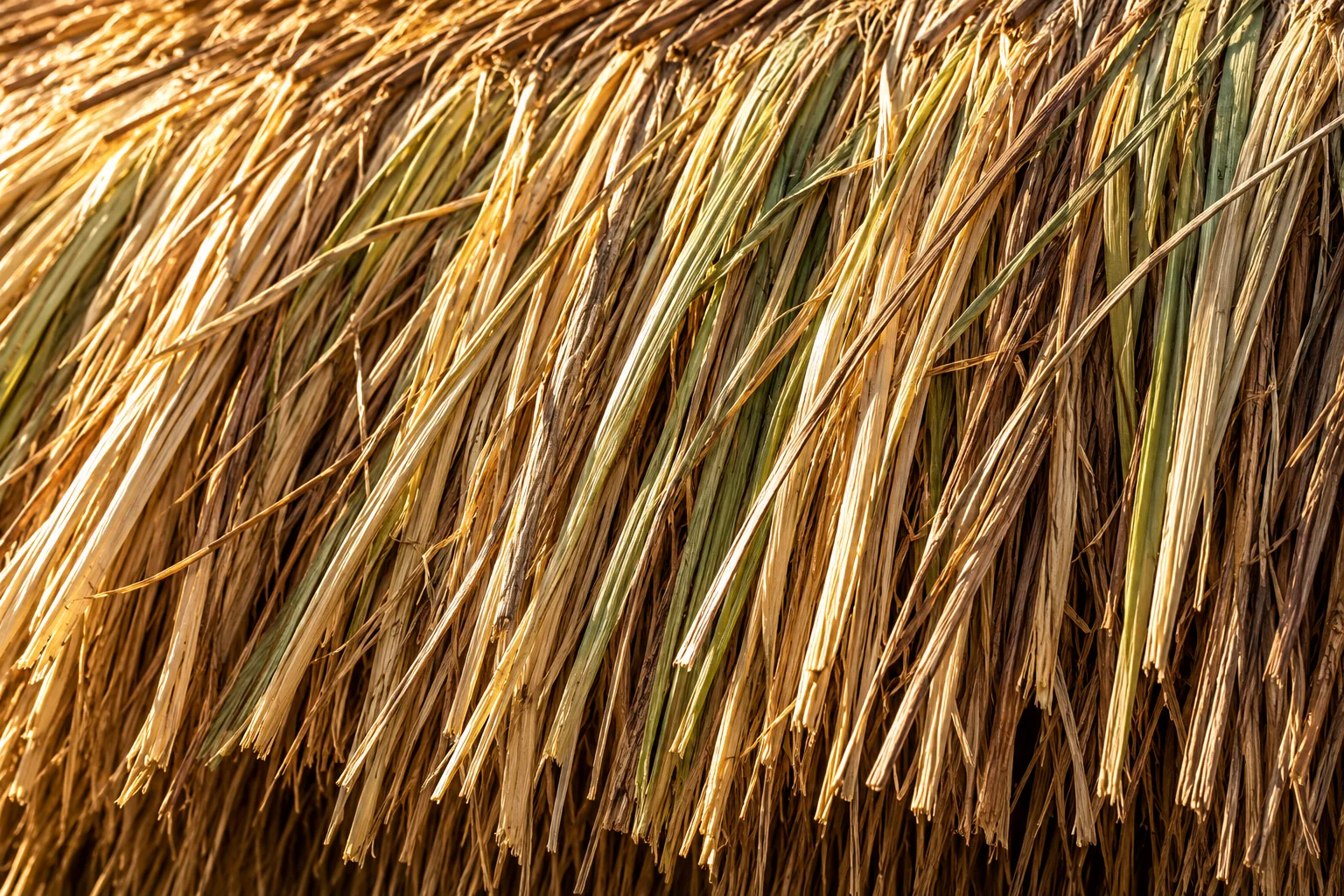 Material guide
The fringe of reed, the weave of woven mat, the line of bamboo.
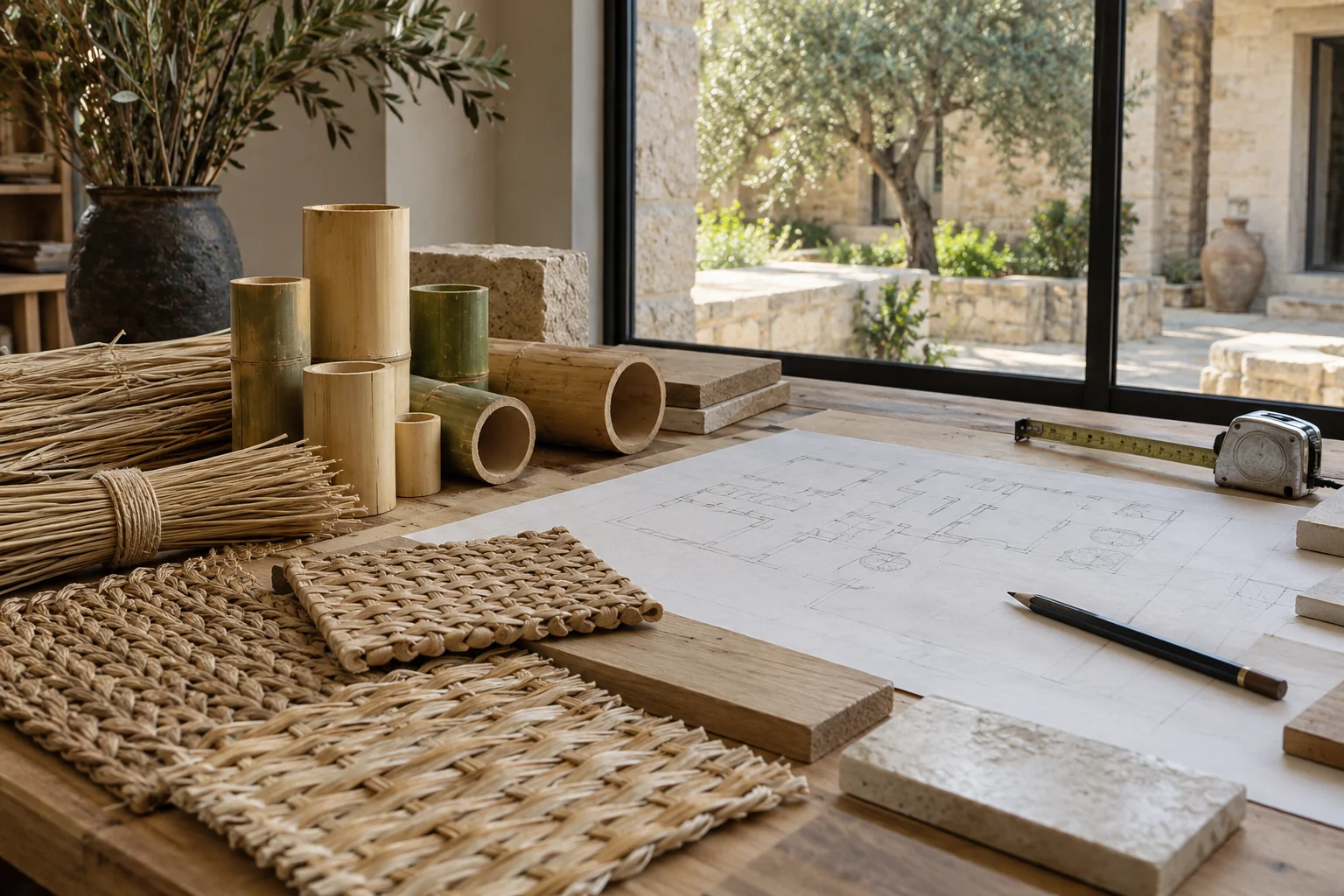 Project guide
Five pieces of information you can prepare for a clearer project.
Material guideThe look of a reed roof comes from fiber direction, layer density and roof form. Here is what to check before choosing.
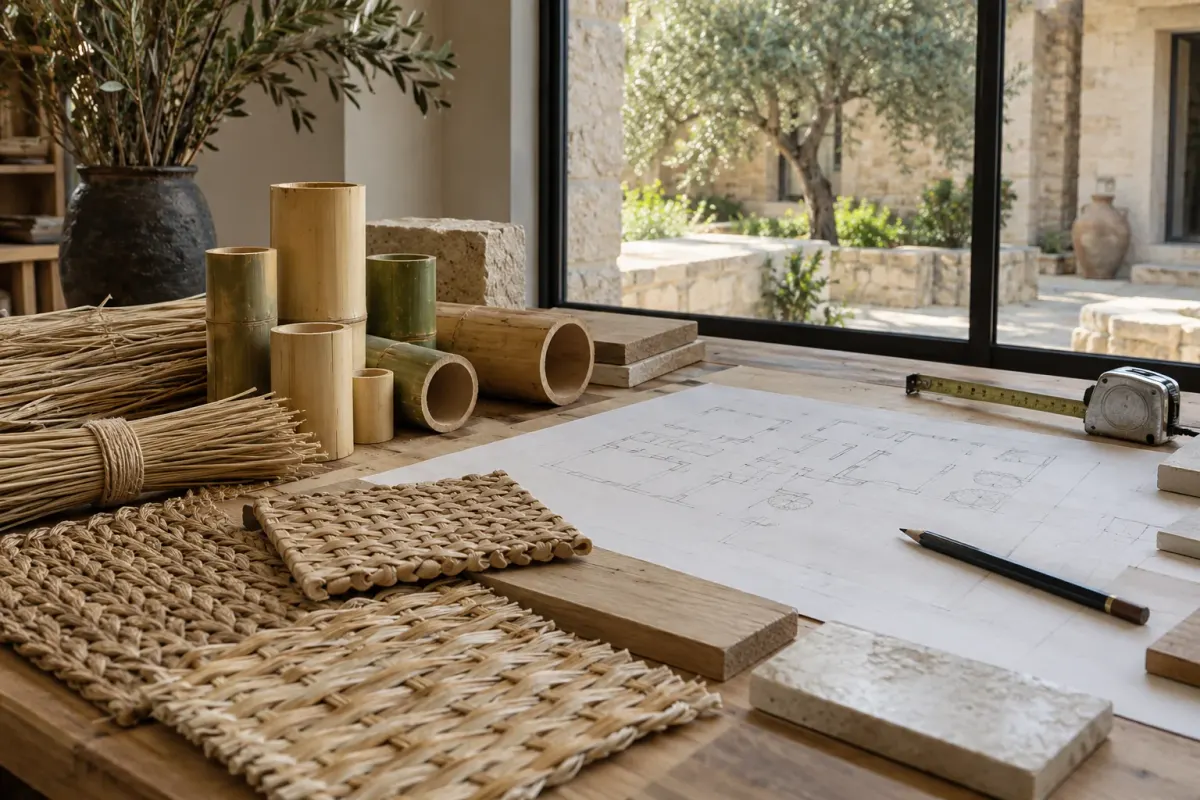 Project guide
Why an on-site visit matters, what to look at when measuring, and which photos and details make the first meeting far more productive.
 Material guide
Choosing a reed parasol means considering diameter, pole, structure and spacing together. Points to check before deciding.
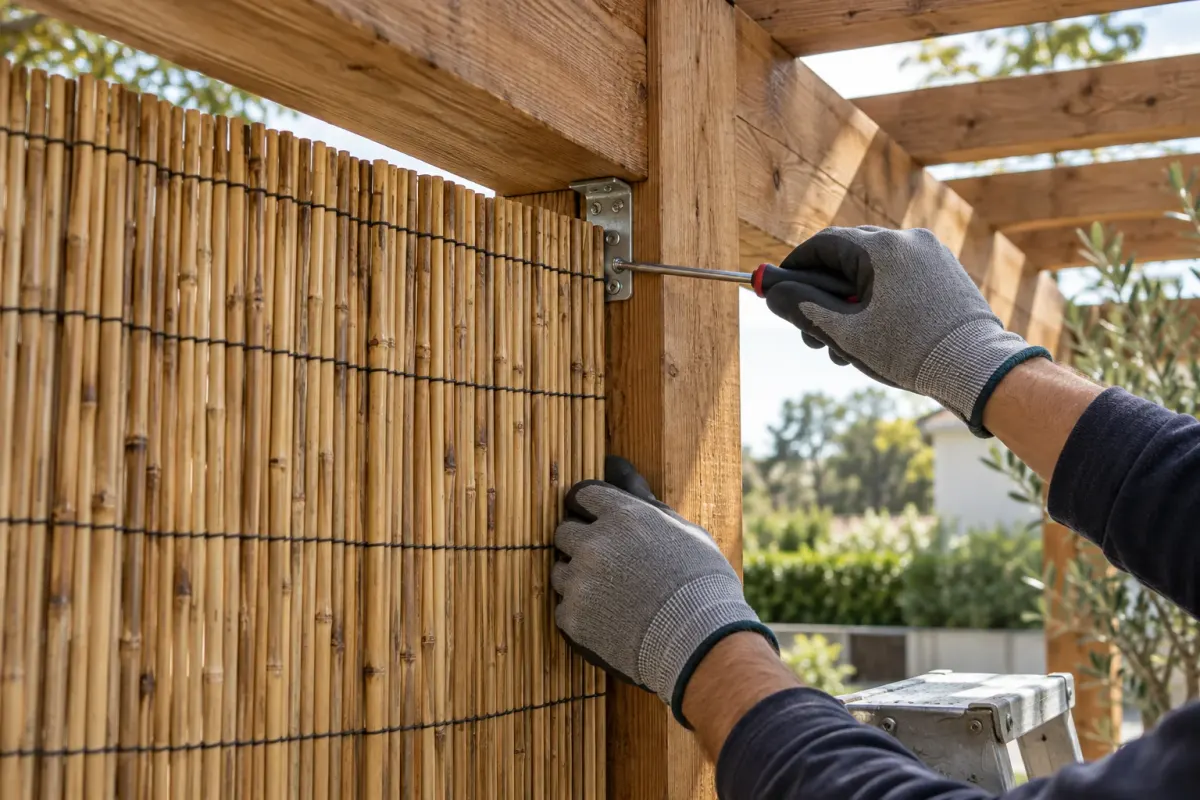 Project guide
What stages does a natural material project usually go through? We explain the process from first conversation to handover in a simple flow.
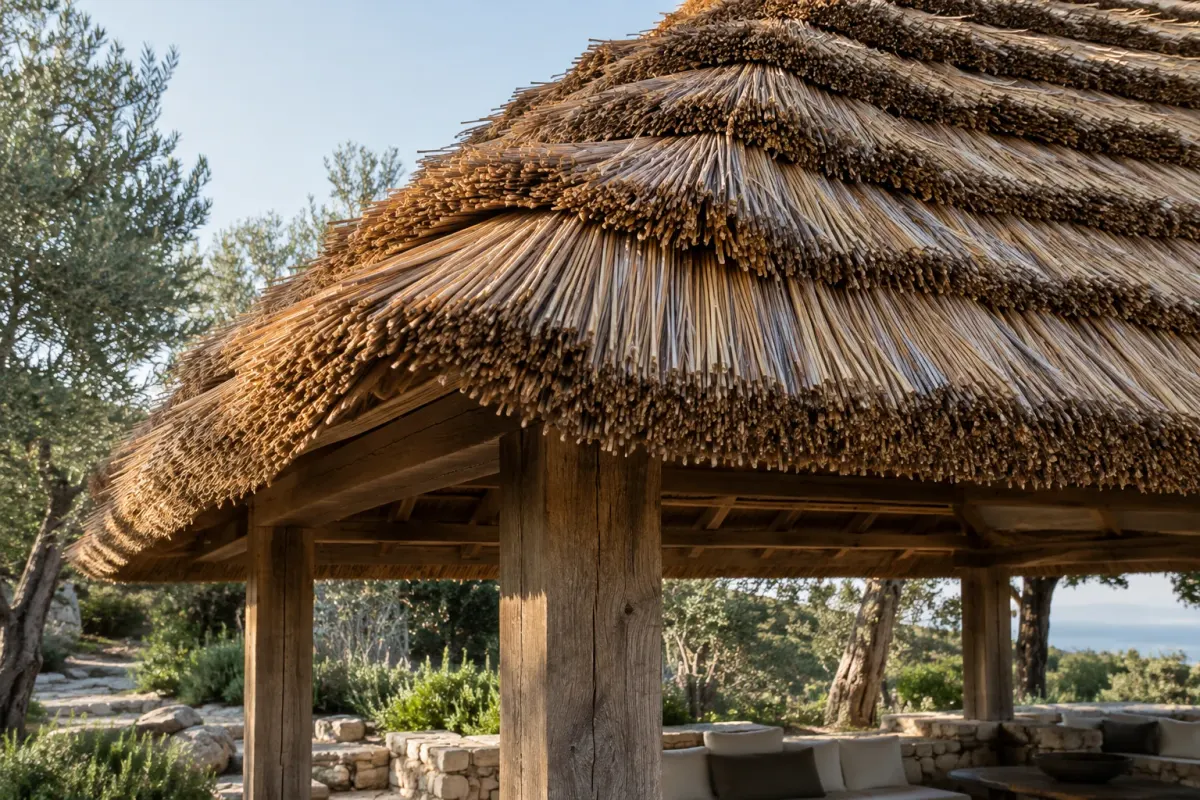 Material guide
The name hedgehog roof can describe different natural coverings. A general reading of what to look at beyond the name.
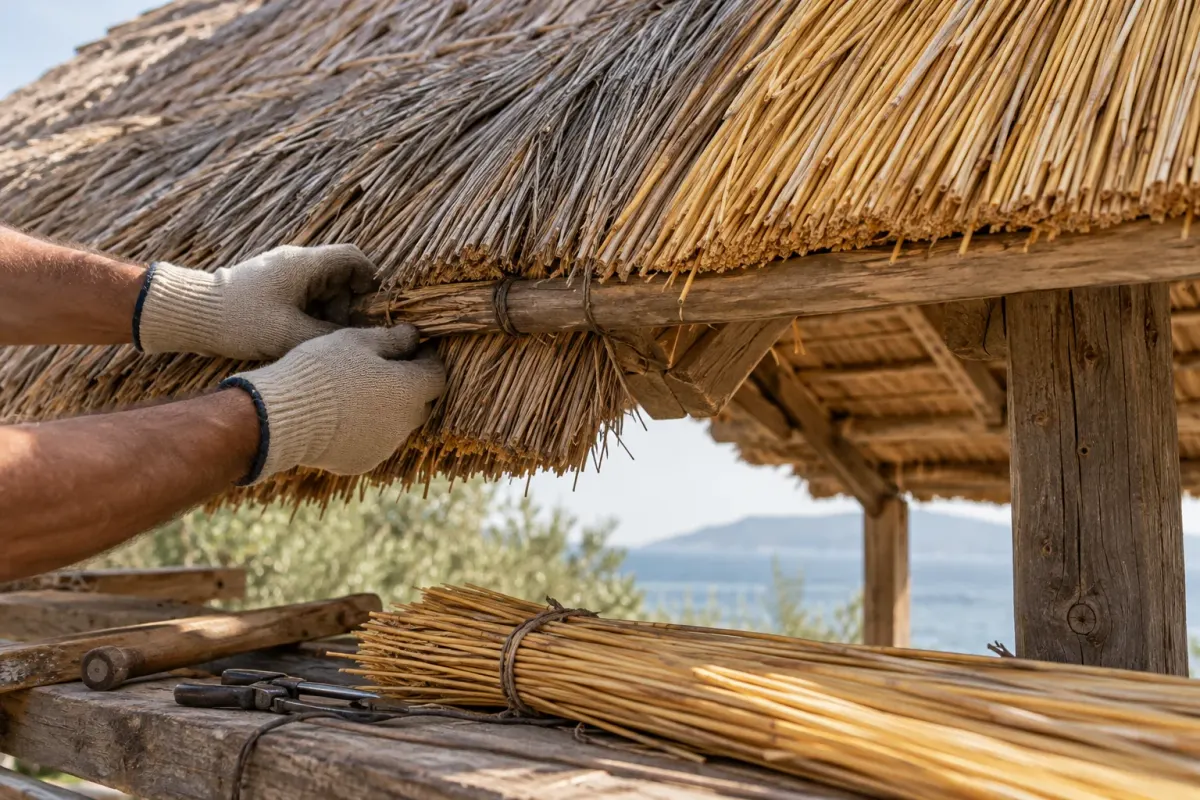 Material guide
How do reed, woven mat and bamboo behave over time? A general look at why regular checks matter and how a renewal decision is made.
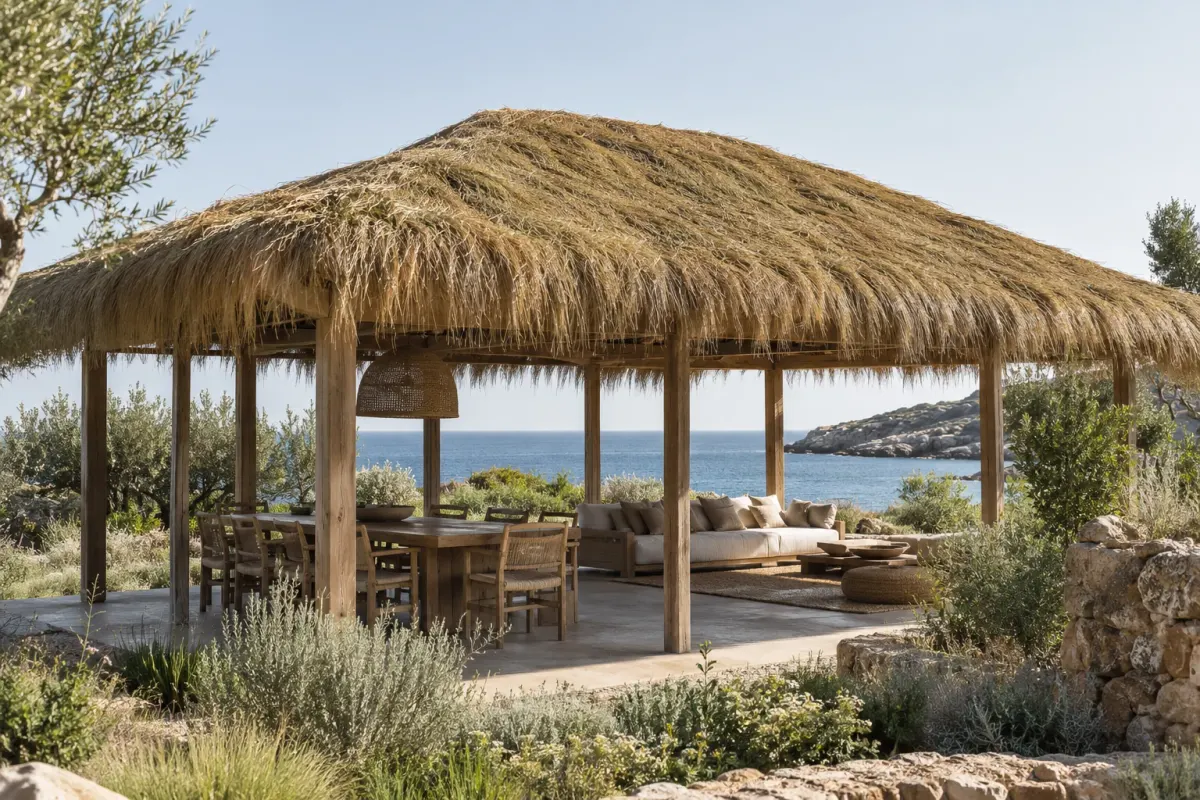 Material guide
One is a roof surface, the other an edge finish. General information on where hanging grass cladding and hanging fringe differ and how to choose.
Space notesHow do the direction of the sun, the prevailing wind and seasonal change affect reed, woven mat and bamboo? General notes to keep in mind while planning.
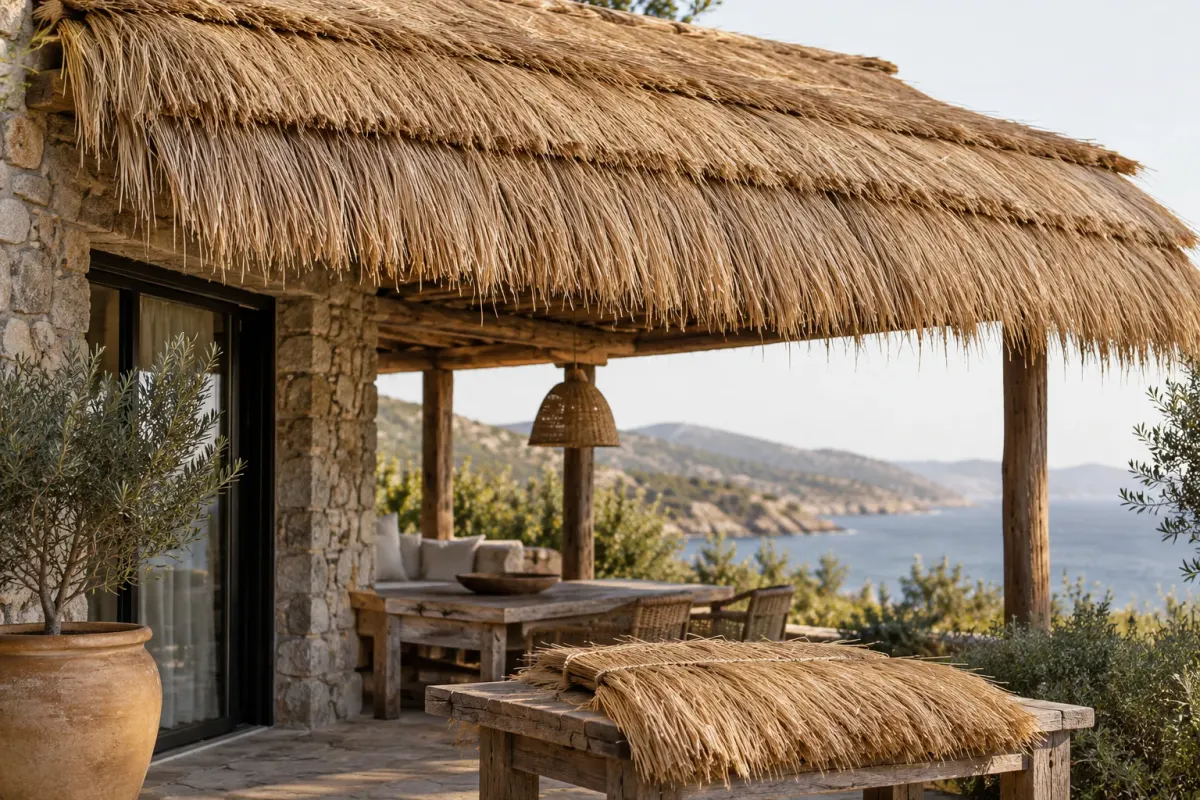 Material guide
Chinese grass is a trade name that can describe different products. General notes on species, panel size and how to look at a sample.
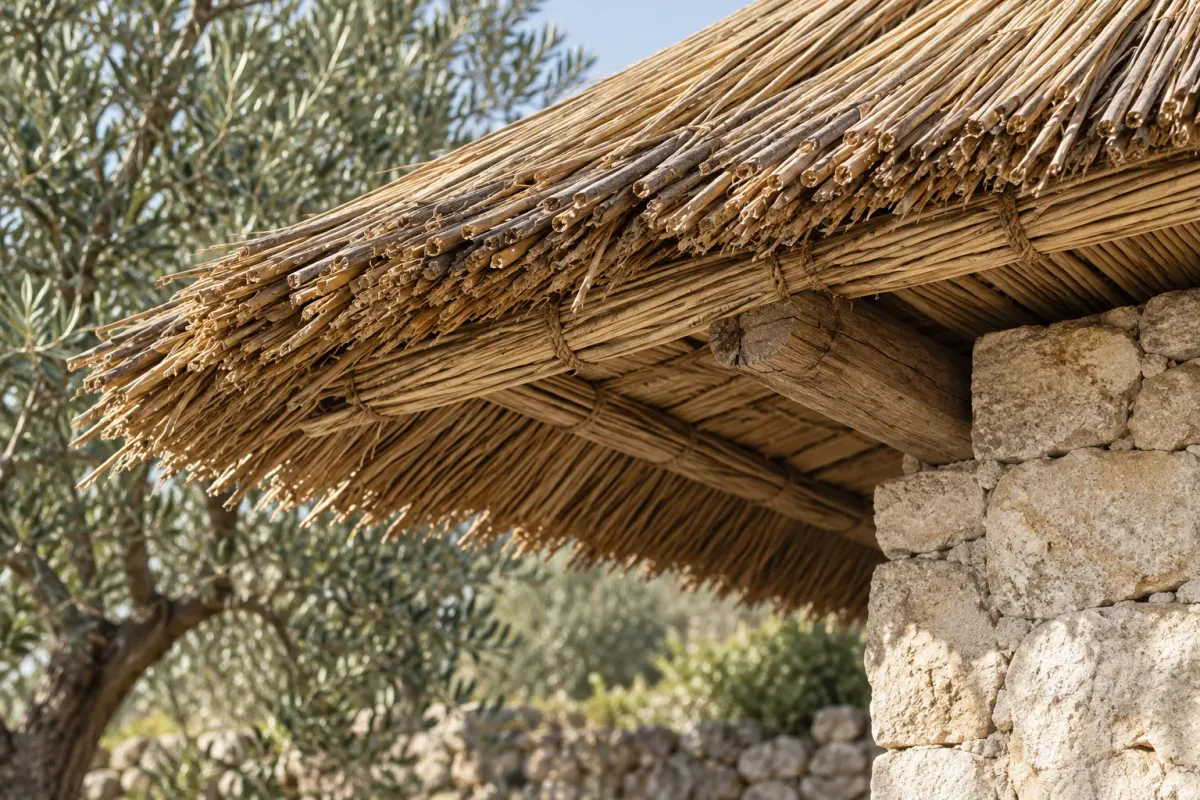 Material guide
General awareness notes on fire risk in spaces with dry natural materials such as reed, woven mat and bamboo, and the topics to discuss during planning.
Material guideOn a woven mat ceiling the weave is not the only thing that sets the look; panel joints, edge finishes and lighting points matter too.
Space notesHow to plan lighting and electrics in spaces with woven-mat ceilings, reed roofs and bamboo cladding. Topics worth raising right at the start.
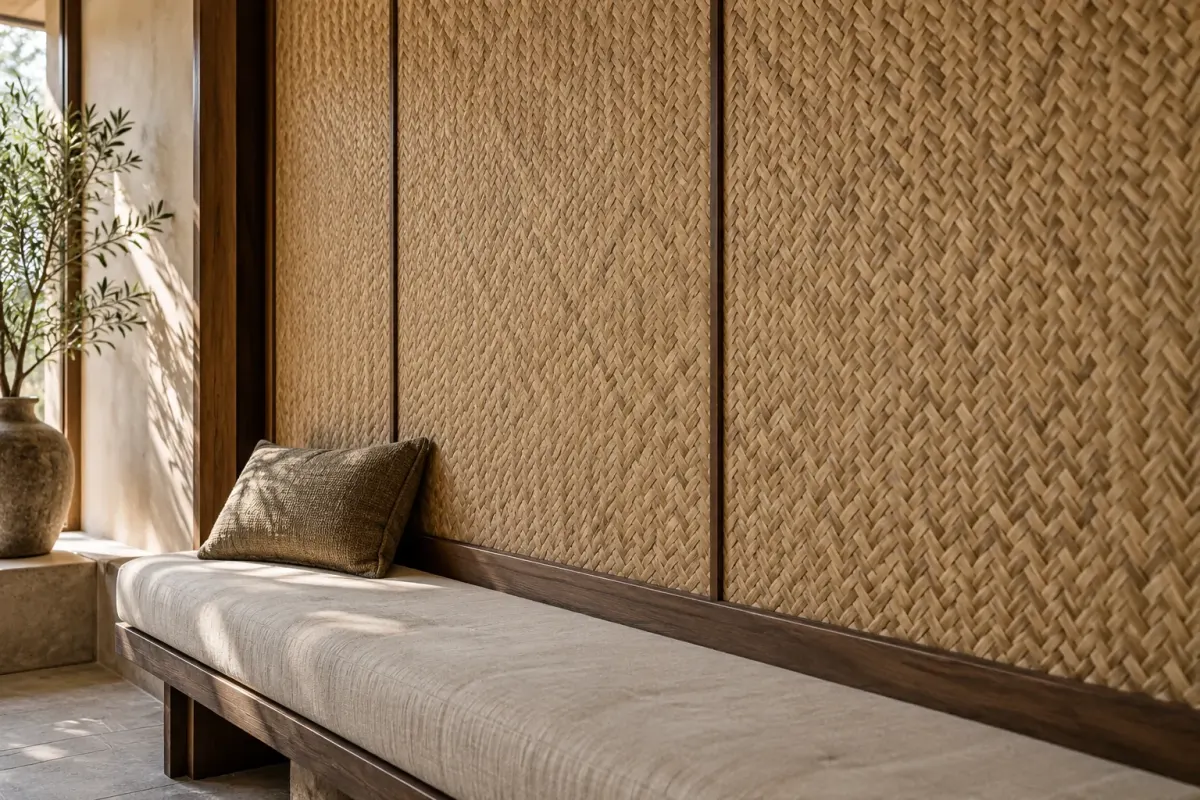 Material guide
On woven mat wall cladding, panel size, pattern direction, joints and perimeter trim are decided together. A general reading before deciding.
Space notesHow do reed, woven mat and bamboo relate to water? General concepts such as slope, drainage and ventilation, and points to discuss during planning.
Material guideChoosing reed fencing and rolls means weighing visibility, fixing spacing and wind together. A general reading of the material.
Space notesGeneral climate notes to keep in mind when planning reed, woven mat and bamboo installations on Aegean coasts such as Bodrum, Cesme, Marmaris and Kusadasi.
Material guideIn a bamboo pergola the character of the shade comes from element spacing, diameter and the shading layer. Joint details are part of the design too.
Space notesGeneral climate notes for natural material installations on Mediterranean coasts such as Kas, Alanya and Belek, and in TRNC areas such as Kyrenia, Iskele and Famagusta.
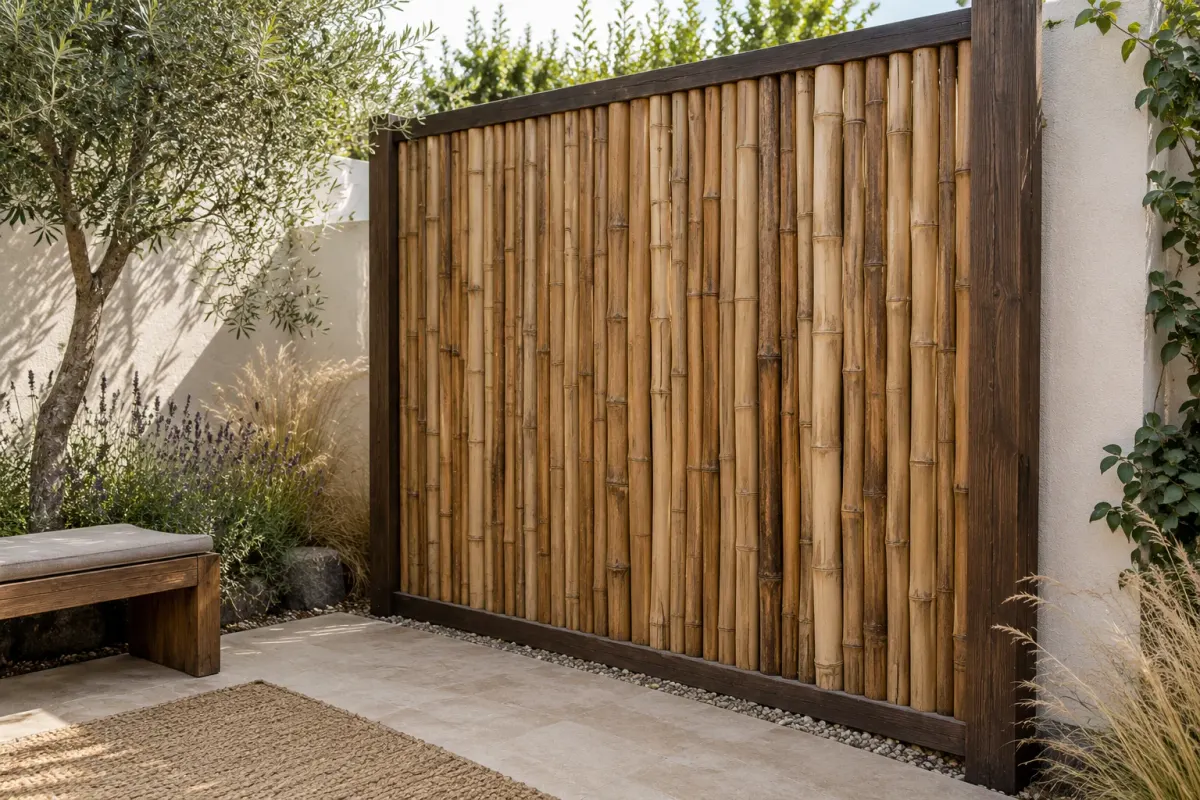 Material guide
In bamboo fences and screens, diameter and element spacing change how much can be seen through. Frame, fixing and ground contact also need planning.
Project guideSteps and a checklist to keep in mind when planning natural material structures before the season at seasonal facilities such as hotels, beaches and restaurants.
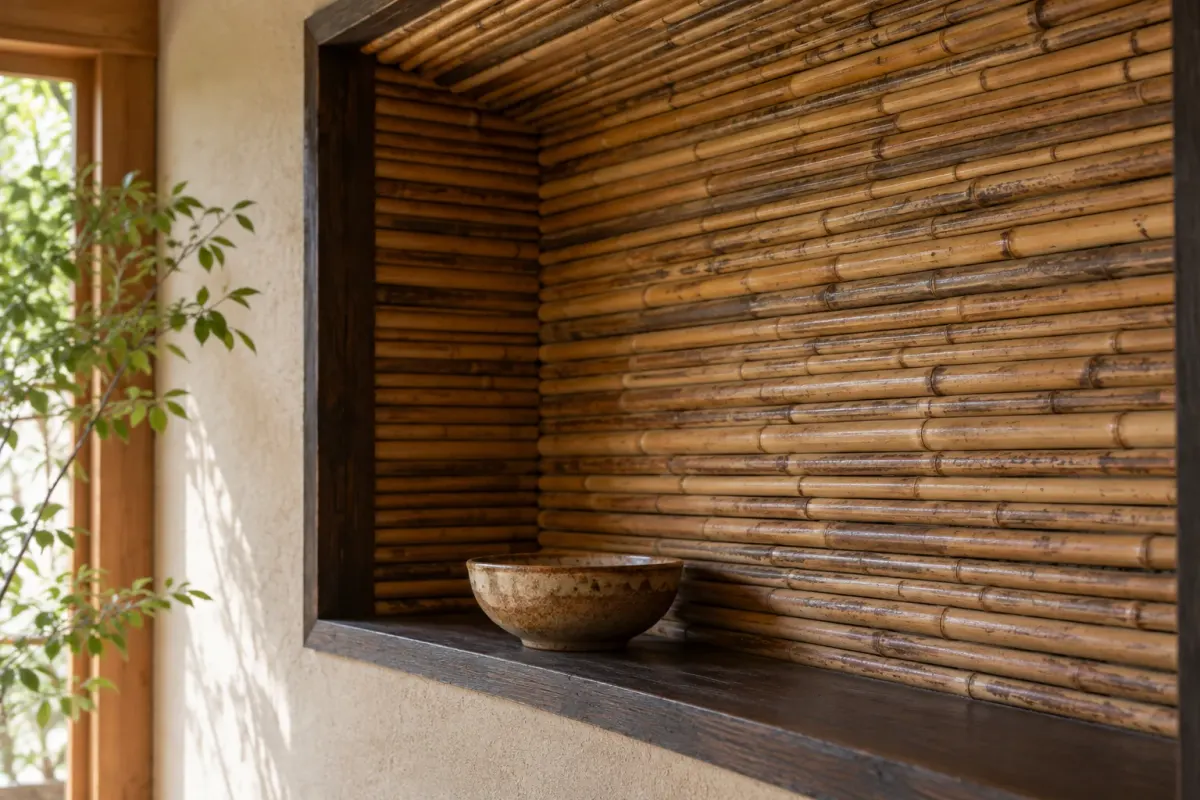 Material guide
Decorative bamboo settles whether it becomes background or focal point in a space through density, direction and frame design.
Material guideReed, woven mat and bamboo change colour over time. We explain the reasons for this change and how this natural process can be seen as a form of beauty.
Material guideThree natural materials, three different characters. The criteria to look at when comparing: appearance, use area, surface and detail.
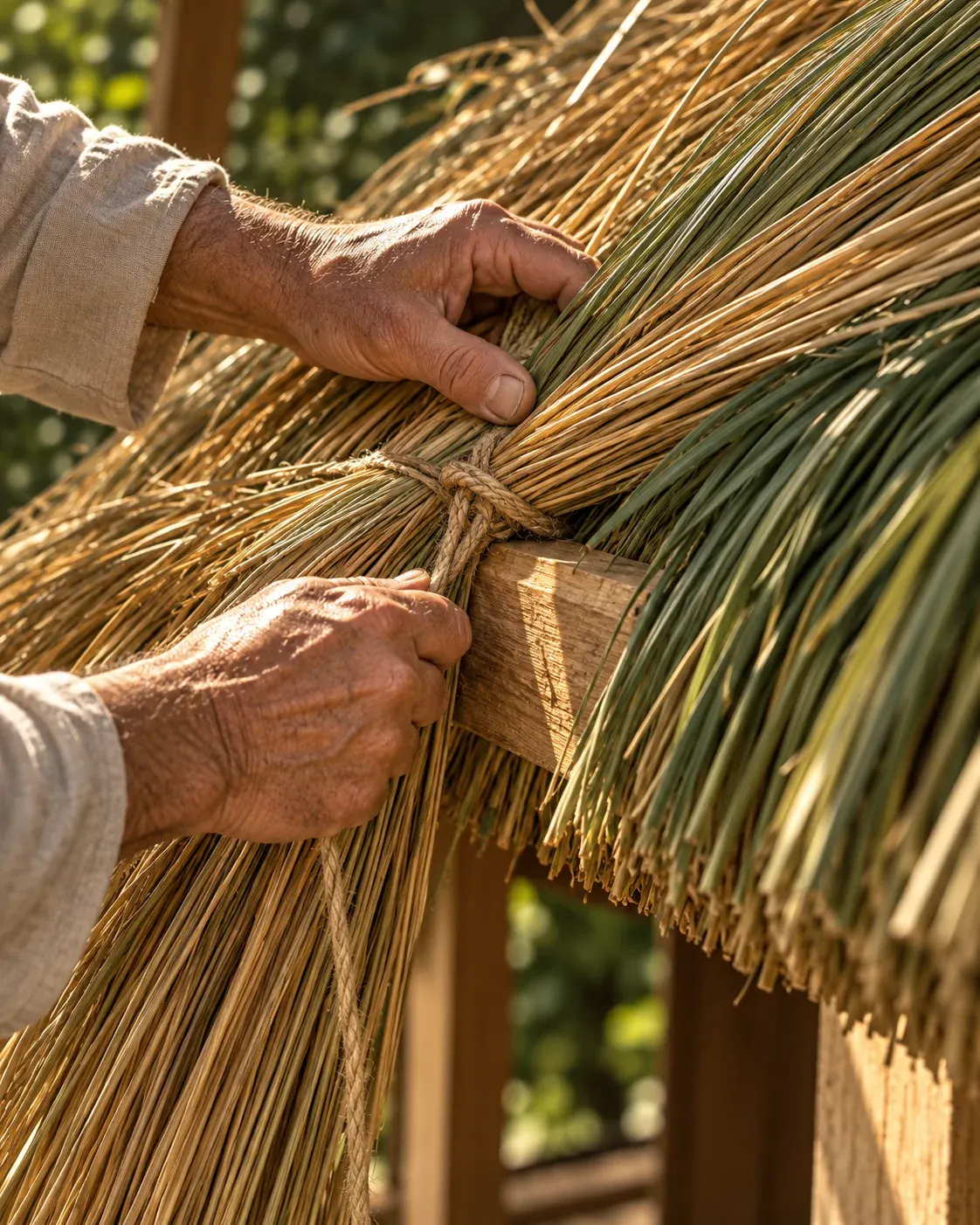 Material guide
Which questions are worth asking about sustainability when choosing plant-based materials such as reed, woven mat and bamboo? A measured, general overview.
These notes offer a practical starting point for choosing natural materials, placing shade structures and preparing your project. Describing what drew you to an image makes it easier to define the right product and the scope of the work.
Tell us about your space. Let’s shape the first idea together.
PLAN YOUR PROJECT