In brief
The strength of a small terrace or balcony comes from making the right decisions in little space. In this article we gather in simple sections the three basic decisions for shade, privacy and seating, building privacy with reed fences and bamboo screens, light and flexible solutions, using plants together with natural texture and what to look at before measuring. The notes offer a general frame; the scope for each terrace becomes clear at the survey according to its own conditions. The images on the site are architectural concepts. We kept it short: each section answers one question, and a three-question FAQ closes the article.
Three decisions in a small space
On a small terrace, wanting everything at once crowds the space. Instead make three basic decisions: where will you sit, where will shade come from and in which direction do you want privacy? These three answers set the frame that shapes material and layout.
Note the size of the terrace, the height of the railing and the direction it faces. In small spaces even a few centimeters can change the layout.
A surface for privacy, a light top for shade
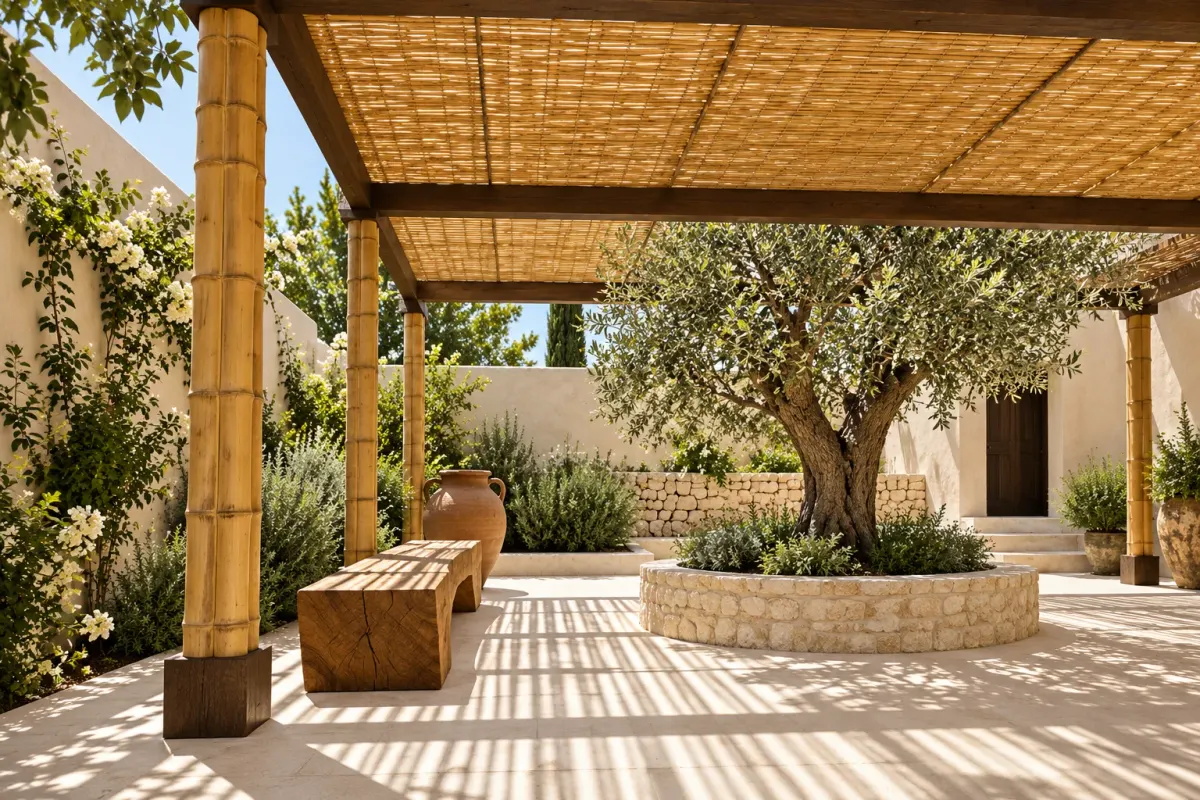
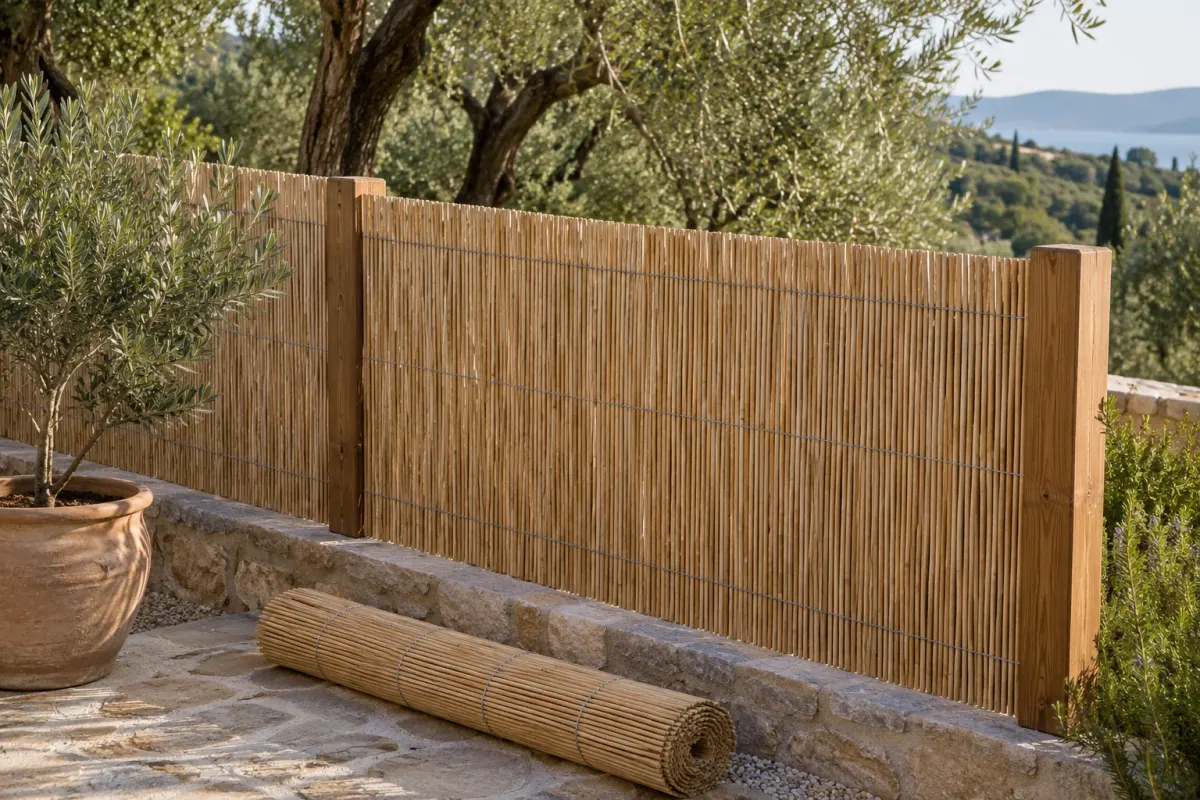
A reed fence and rolled reed applied to the railing or side wall forms a natural screen against neighbors' eyes. A bamboo fence and screen gives a more distinct line. Above, a light bamboo frame or a small shade structure defines the seating point.
In small spaces, light and permeable solutions let the space breathe better than heavy, thick structures.
Think light and flexible
Load and carrying
On terraces and balconies, the load capacity of the floor and railing matters. Compliance with building owner or management rules is a practical topic to check before application; so each terrace is assessed separately at the survey.
Replaceable parts
Parts that open and close with the season or change place give a small terrace flexibility. If a fixed application is needed, connection details are clarified at the survey.
What to do before measuring
Measuring a small terrace looks easy, but measuring it correctly matters. Width, depth, railing height, door swing area and, if present, the position of an air-conditioning unit or drain should be noted. Photos taken with a phone from different angles make the measurements much easier to understand.
Observing how you use the terrace for a week is also a good idea. At what time does the sun hit, where does the wind come from, when do you want to sit? These small observations are a big advantage in deciding the material and the layout.
Plants and natural texture together
Natural material together with plants can turn a small terrace into a mini garden. Lining pots in front of the fence or hanging plants from a bamboo frame is a way to use vertical space. The humidity and sun needs of the plants should be considered together with protecting the material.
Send photos and measurements of your terrace via contact or create a quote request; if you need it, we can proceed with survey and consultancy.
Frequently asked questions
Can a reed fence be used on a balcony?
It can. The structure of the railing, building management rules and wind effect are assessed separately at the survey.
Will a shade structure fit on a small terrace?
A light bamboo frame or small shade structure is often suitable. Size and load are checked on site.
Do plants and natural material go together?
They do, but moisture and watering should be considered near the material. Not letting pots touch the material directly is a good start.