Fence and screen: two uses
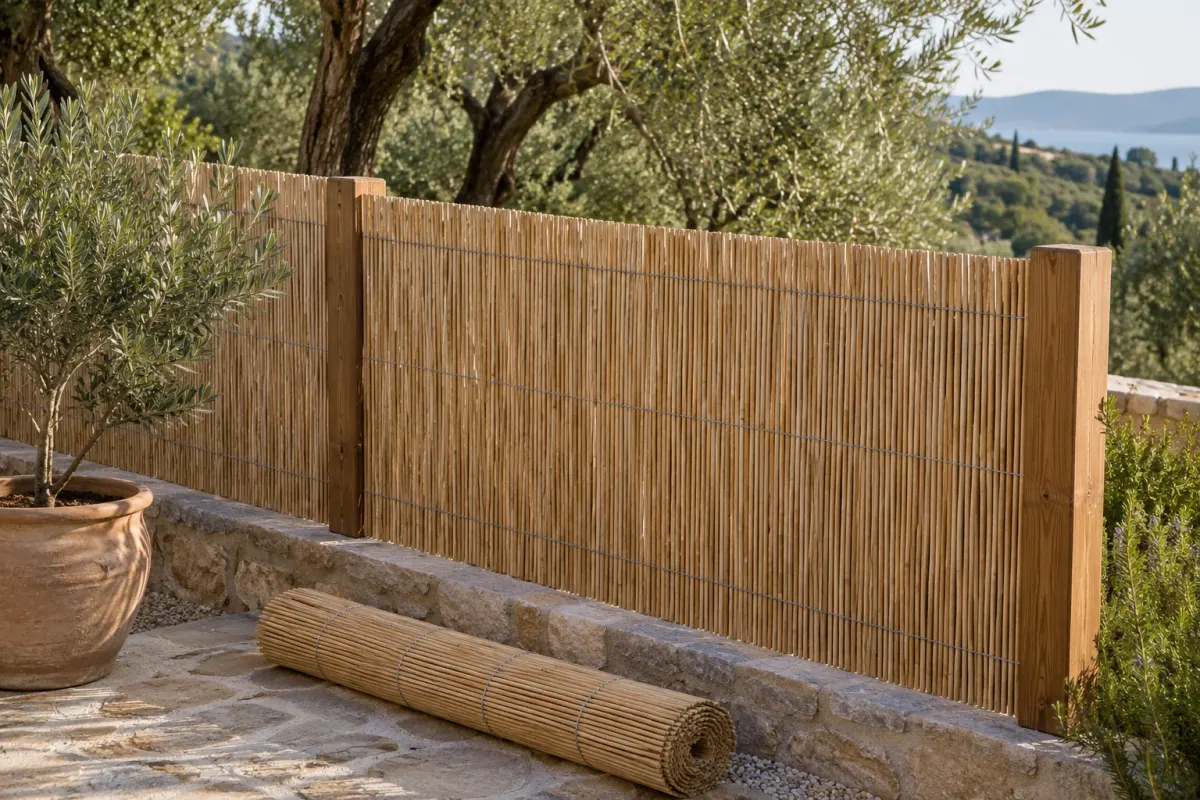
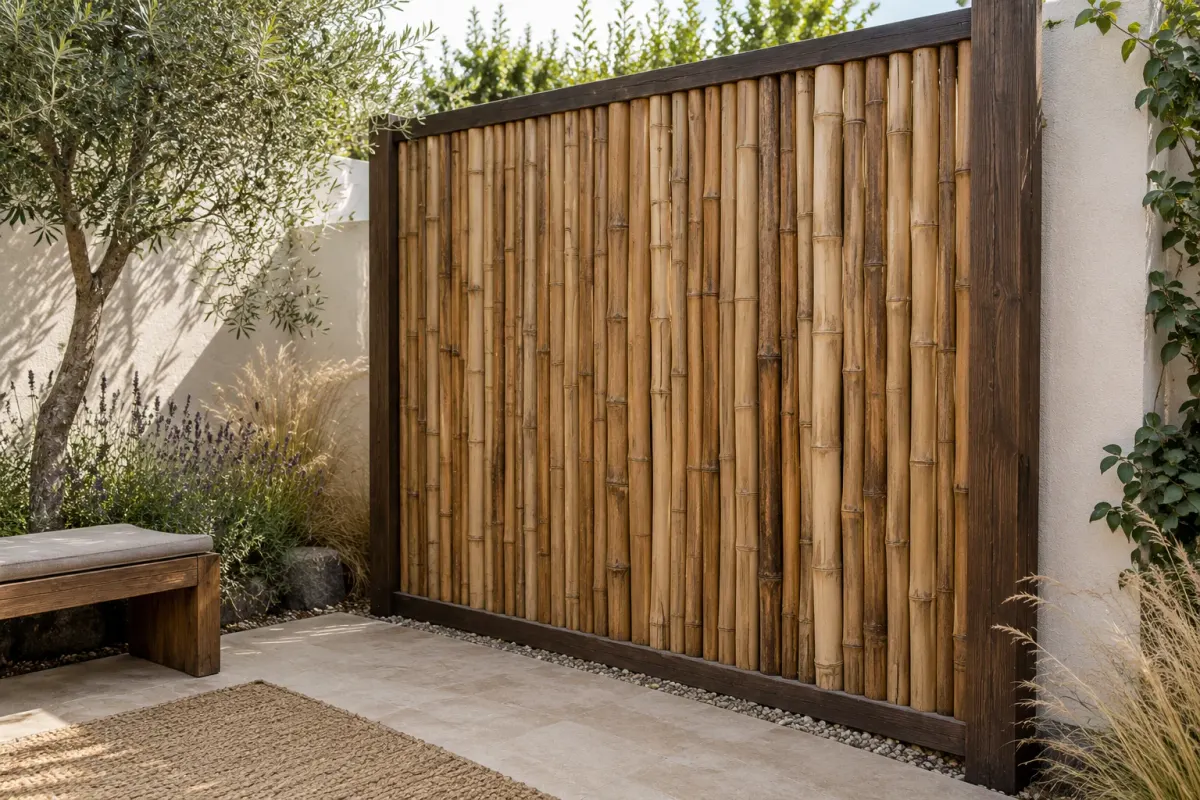
A bamboo fence is usually a fixed line enclosing a boundary, while a screen is a freer-standing element that divides an area. In both, the linear line of bamboo builds a visual rhythm and gives the space a natural character.
As stated on the bamboo fence and screen page, bamboo diameter and element spacing change how much can be seen through.
Diameter and element spacing
Thin, closely set elements form a more closed, private surface. Thick, spaced elements give a more open, architectural line. The choice depends on how independent the divided area should feel.
The rhythm of the bamboo nodes is part of the look as well. Aligning the nodes of the elements or deliberately offsetting them gives different characters; comparing them on a sample or a drawing is useful.
Frame and fixing
How the fence or screen is attached to a frame or post affects both strength and appearance. Leaving connections exposed highlights the handcrafted feel; hiding them gives a cleaner surface.
It should not be forgotten that a closed surface creates load on lines exposed to wind. Post spacing and height are planned with this effect in mind.
Screen placement and use
A screen divides an area without cutting its relationship with the neighboring area entirely. It can be used to separate seating groups in a restaurant, to enclose a resting point on a beach or to hide an entrance area. Circulation paths and service passages should be kept in mind when placing it.
Whether it is portable or fixed also changes how it is used. A fixed screen draws a permanent boundary, while portable ones help the space adapt to different layouts. Which is suitable is determined by the rhythm of use of the area and the ground conditions.
It should be remembered that bamboo is a natural material and each element can differ slightly from the others. Differences in diameter and color become part of the design through correct selection and arrangement. Sorting the elements before installation and using those of similar diameter together helps the surface look orderly.
Contact with the ground
The end of the bamboo that meets the ground is the most sensitive point for moisture and standing water. Lifting this zone slightly off the ground or solving it with a suitable base detail helps keep the appearance.
To share a photo and line dimensions of the area, the quote form can be used, and for a maintenance approach the maintenance page.
The end cuts and top finish of the elements also affect the look. A straight cut feels modern and clean, while an end finished at a natural node feels more organic. This small choice is one of the details that set the overall character of the fence and should be settled at the design stage. Seeing the two options side by side on a sample clearly eases the judgment of which suits the space better.
Frequently asked questions
Does a bamboo fence block the view completely?
It depends on element diameter and spacing. Closely set thin elements give a more closed surface; a spaced arrangement lets the view through partly.
Can a screen be used outdoors?
It can, but sun, moisture and wind should be considered separately. The ground-contact detail and the fixing solution matter for keeping the application looking good.
What information is needed for a bamboo fence?
The length and height of the line, the existing ground and post options, and the visibility wanted are enough for first information. Details are settled during the survey.