In brief
A beach layout is read through how shade, bar, loungers and service routes connect. In this article we gather practical notes on thinking about shade, circulation and seating on the shore as one whole, using reed umbrellas and bamboo details. The aim is not to hand you a ready template but to show which questions to start asking when you look at your own shoreline. The notes offer a general frame; the scope for each shoreline becomes clear at the survey according to its own conditions. We kept it short: each section answers one question, and a three-question FAQ closes the article.
Draw the flow of the shore first
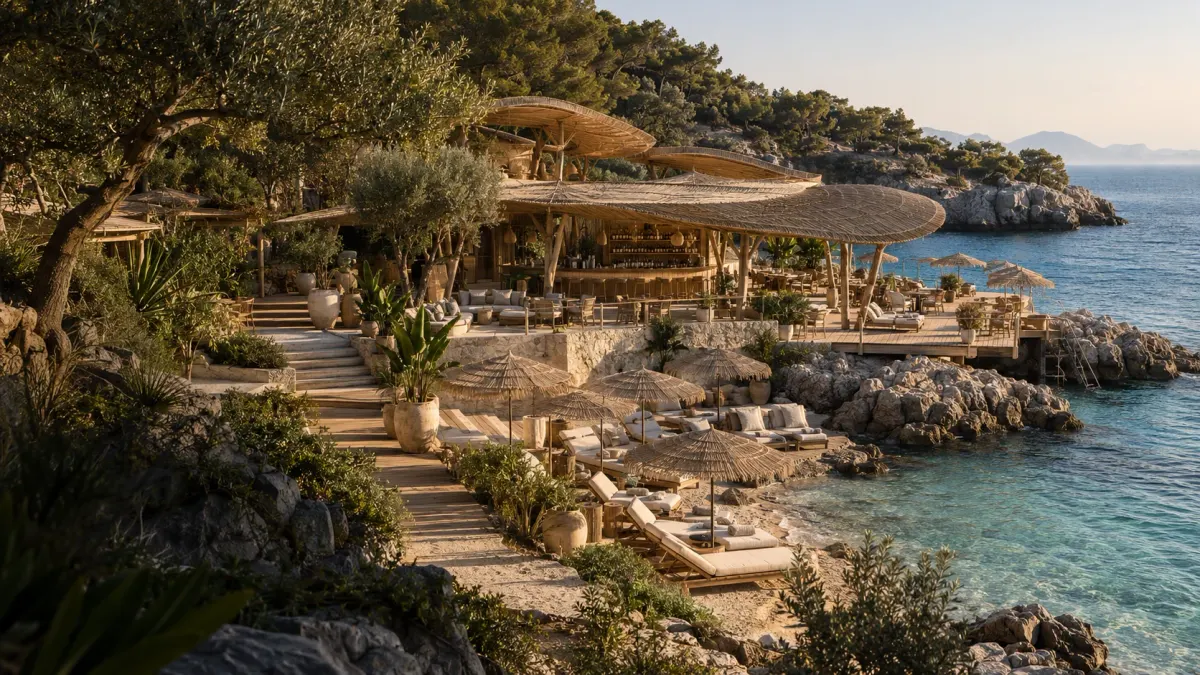
It helps to read a beach club from the waterline inward. When the entrance, bar, service point, lounger rows and the path to the water sit on one sketch, it becomes clear where each shade structure belongs. Mark the sun's direction through the day and the prevailing wind; shade should work in the afternoon as well as at noon.
Conical reed umbrellas act as a layout tool at this stage: a repeated form divides the area into small zones by itself and guides the eye along the shore.
Let shade, bar and seating connect
The most common problem on a beach is that every element looks good on its own but feels disconnected from the rest. When the canopy over the bar and the umbrellas over the loungers speak the same material language, the place reads as one whole. Routing service paths between clusters of shade keeps both staff and guests moving comfortably.
At the bar, bar and counter cladding can be considered together with a fringed canopy above, so the front, the cover and the seating belong to one atmosphere.
Think of the material in terms of shore conditions
Reed umbrellas and reed roofs
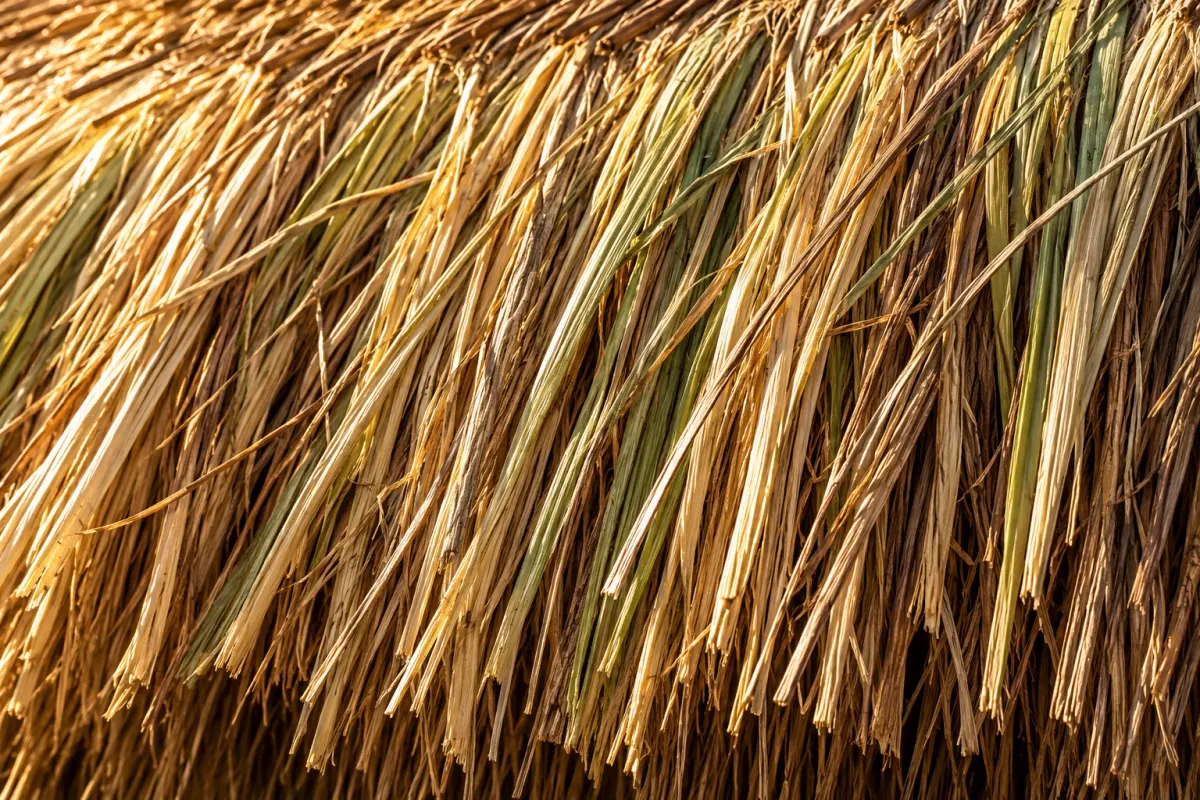
Salty air, strong sun and wind affect how natural material looks and how much care it needs. That is why, when choosing a reed umbrella or reed roof, fringe length, support connections and the openness of the site to wind are assessed together at the survey.
Bamboo and woven mat details
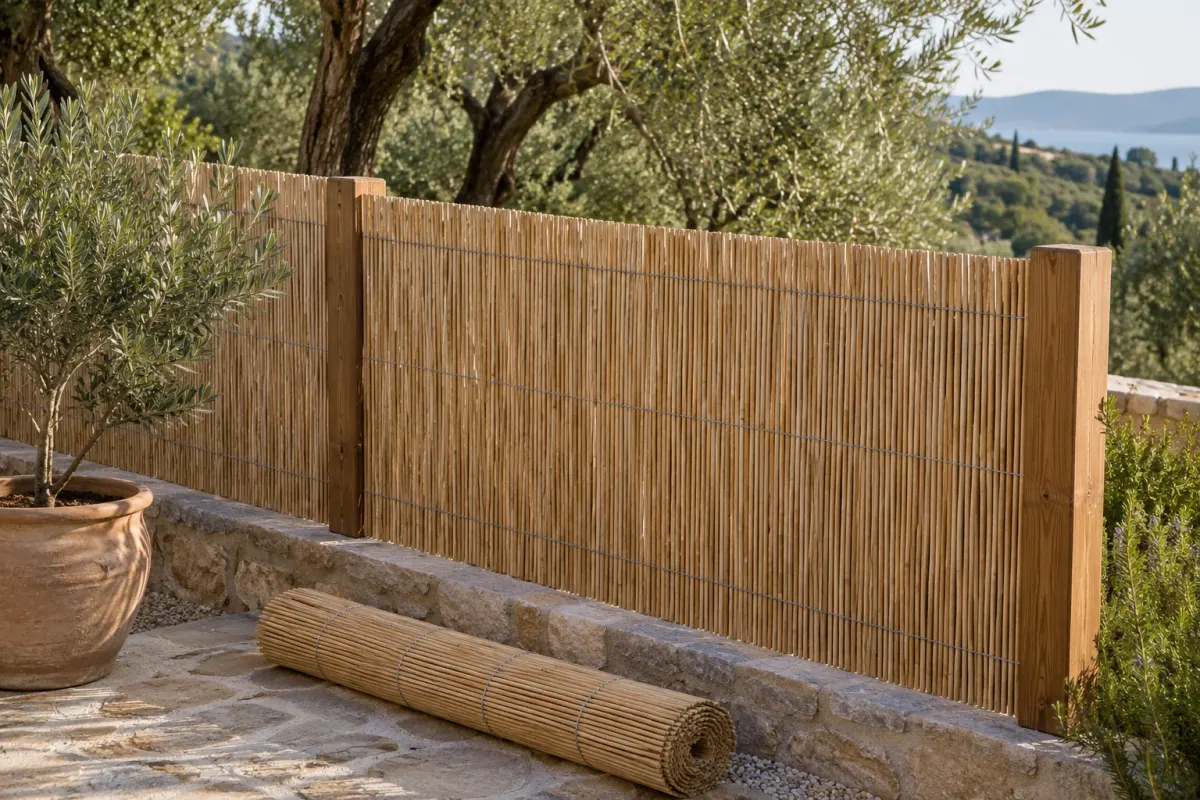
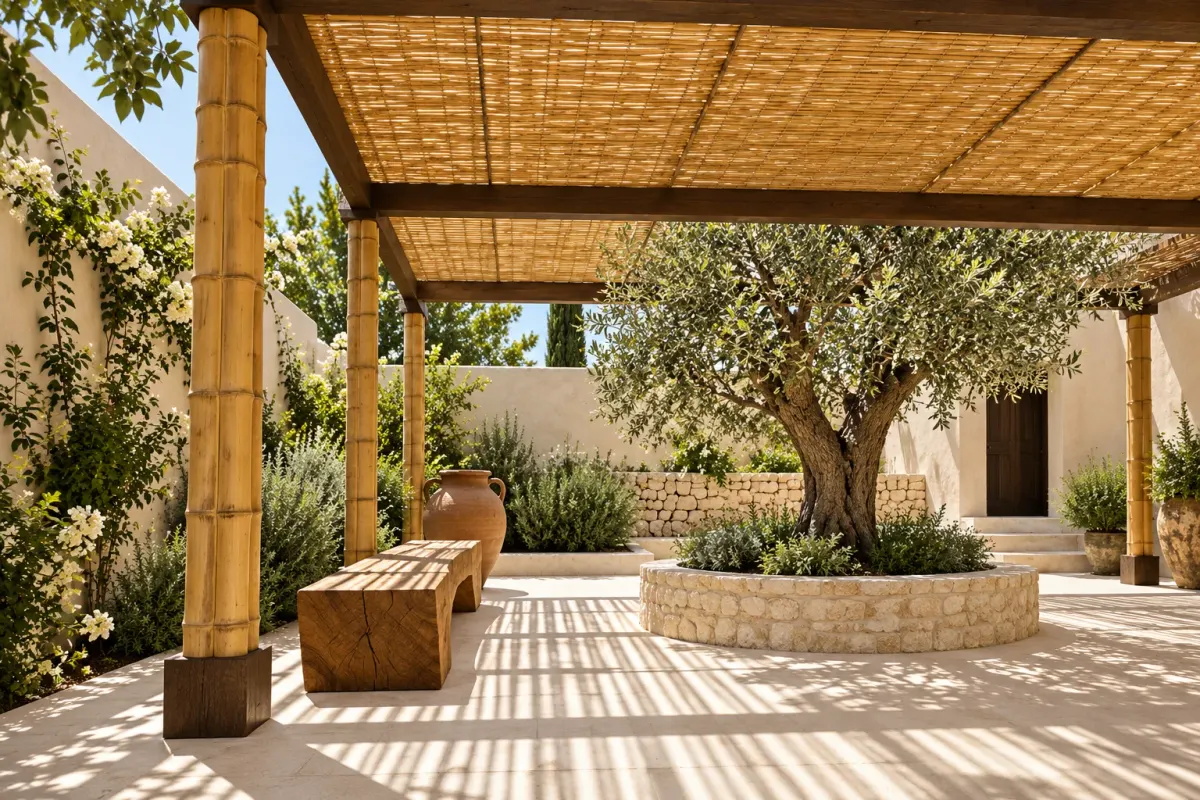
Bamboo screens can soften wind without blocking it, and woven mat surfaces can add texture at bars and rest points. The scope of each application is clarified according to the conditions of the site.
Daytime and nighttime use
A beach does not work only by day. Toward sunset the same area turns into a bar and a place for conversation. Lighting under a shade structure can highlight fringe and woven texture with a soft glow; but the position of light sources should be planned so they do not dazzle users or heat the natural material directly.
Think about seasonal use as well. Out of season, some elements may need to be taken down or protected. Deciding this at the design stage lets connection and support details be set up accordingly.
Build a large area from small units
Instead of solving a wide beach with one big gesture, dividing it into small resting points gives a more human scale. Clusters of three or four umbrellas read together with the gaps between them. Build one sample cluster first, see how it feels, then extend it across the area.
You can start with the survey and consultancy step by sharing the dimensions, photos and intended use of the space, and leave a quote request.
Frequently asked questions
Which material suits a beach club?
There is no single answer. Reed umbrellas or a reed roof can be considered for shade, bamboo and woven mat cladding for the bar, and bamboo screens for dividers. The choice is clarified at the survey according to shore conditions and use.
What spacing should I use between umbrellas?
There is no fixed measure. Circulation, lounger direction and service routes are considered together, and these distances are set by measuring on site.
Are the images completed projects?
No. The images on the site are architectural concepts prepared with reed, woven mat and bamboo; they do not show a completed project.