Surface design, not ornament
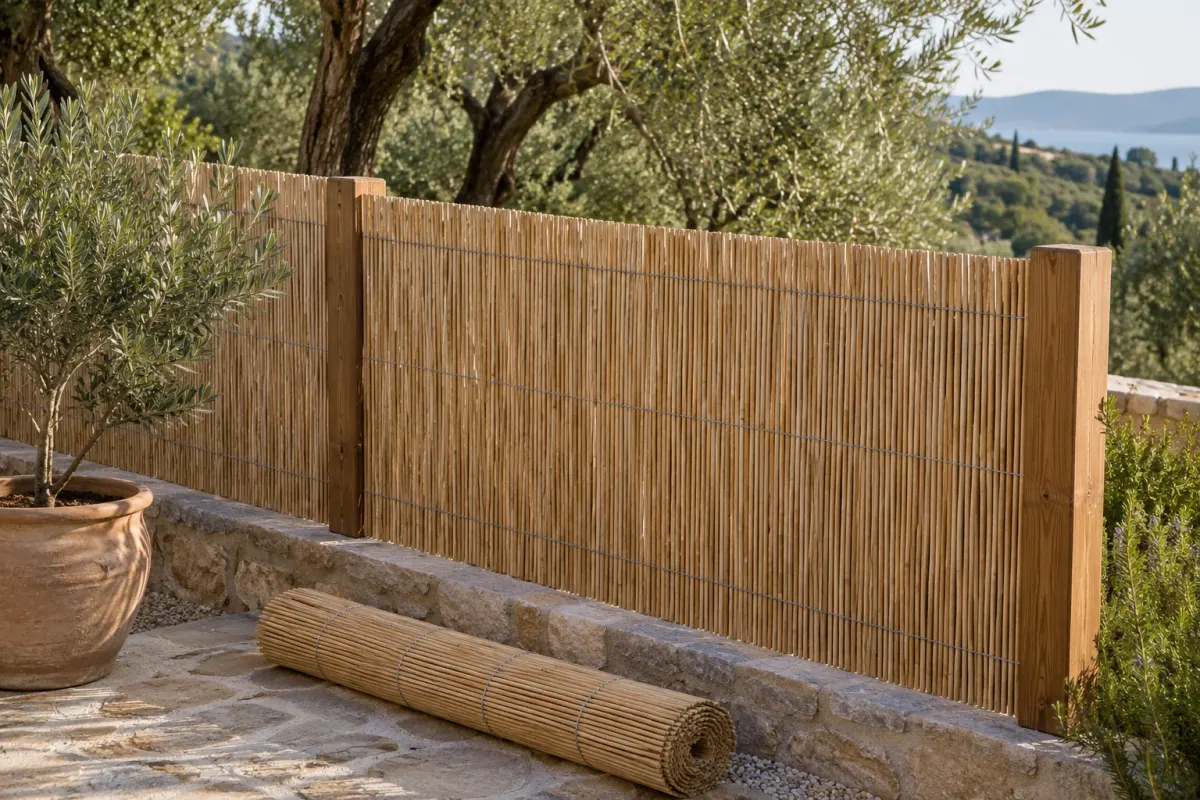
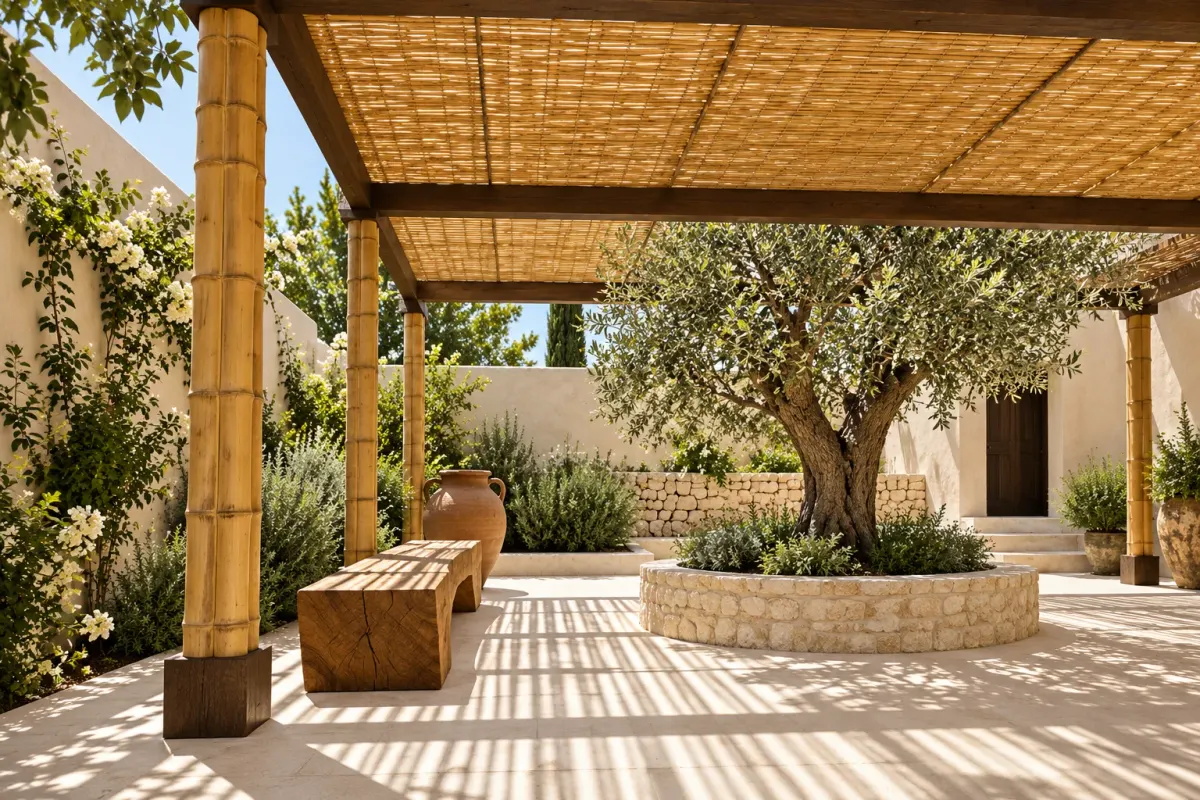
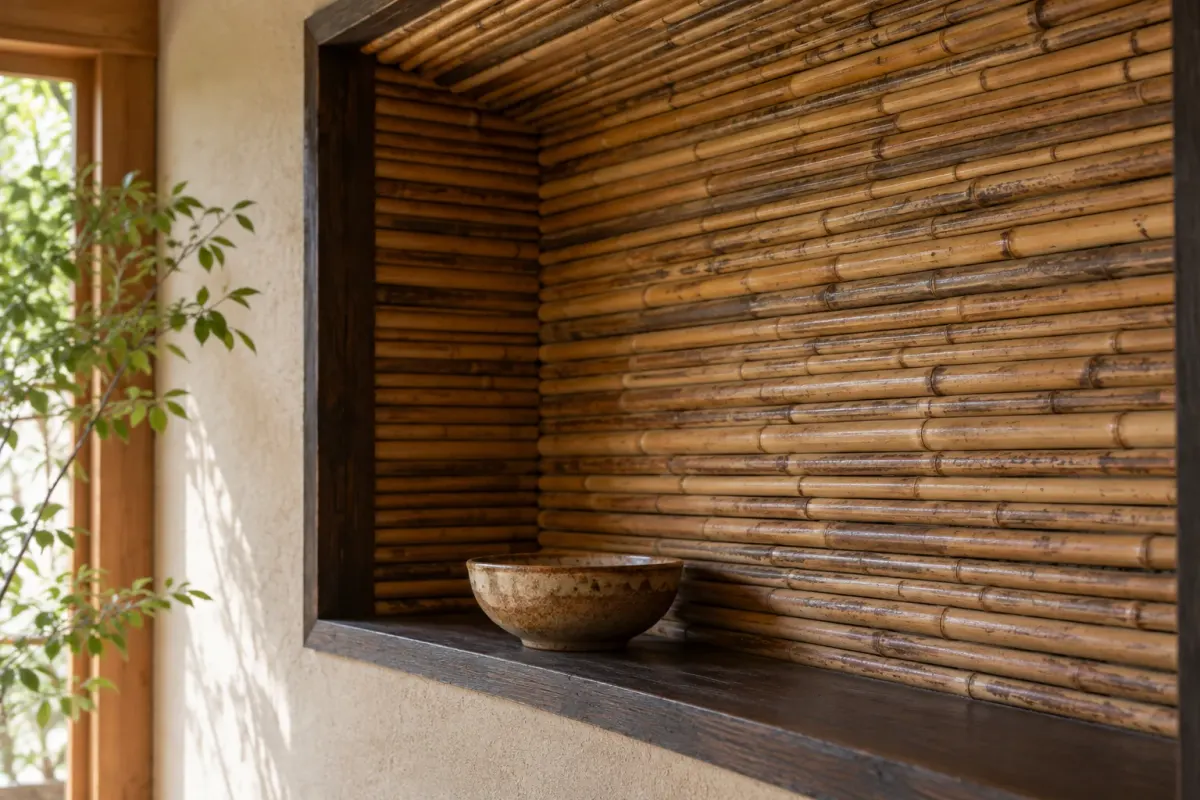
Decorative bamboo serves surface and atmosphere design more than it serves as a structural element. On a wall, ceiling edge, bar front or divider, it turns the linear line of bamboo into a design language.
As described on the decorative bamboo page, density, direction and frame design decide whether the material becomes background or focal point in the space.
Density
Closely set elements create a full, calm and unified surface; a sparse arrangement adds play of shadow and depth. The same material can have a very different effect depending on density.
On large surfaces, changes in density can be used deliberately to give the space rhythm. This decision should be assessed on a drawing, together with light and viewing direction.
Direction and frame
The direction of the elements affects how the space is perceived. Vertical lines emphasize height and horizontal lines width; diagonal or patterned arrangements give a more decorative result.
The frame sets the limit of the surface. A pronounced frame presents the bamboo like a panel, while a frameless application makes the surface look like a natural continuation of the space.
Designing together with light
The relationship of a decorative bamboo surface with light largely determines the result. Hidden lighting placed between the elements can emphasize the silhouette of the bamboo from behind, while light from the side brings out the node texture. Each approach creates a different atmosphere.
The lighting plan should be made together with the surface design, because the position of electrical lines affects element spacing and the frame solution. The proximity of heat-producing fittings to the natural material should also be assessed separately. Handling these matters at the design stage reduces the need for surprise decisions during installation.
Maintenance and cleaning should also be thought through from the start. Dust can collect on nodal and spaced surfaces, so a design that is easy to reach helps the surface stay clean in the longer run. Especially in heavily used areas such as bar fronts and dining areas, the cleaning routine is a criterion that influences the choice of material and detail.
Edge returns and installation
Corner returns, edge finishes and installation details are the small items that affect the result most in a bamboo application. If they are not handled at the design stage, the order of the surface can come under strain during installation.
To share a photo and surface dimensions of the space, the quote form can be used. If a special drawing or combination is being considered, the custom design page is worth a look.
Finally, it is worth considering whether the application can be changed or repaired later. On surfaces built with modular panels, a damaged or worn section can be renewed on its own, which allows small interventions while the space stays in use. This flexibility is an important advantage, especially in heavily used spaces expected to be refreshed over time. Choosing panel size and connection method with this in mind is recommended.
Frequently asked questions
Is decorative bamboo used indoors?
It can be used both indoors and outdoors, but suitability depends on the chosen product and on conditions of the space such as moisture and sun. Outdoors, a separate assessment is needed.
How is density chosen?
It is chosen by the effect wanted: dense for a calm, full surface, sparse for play of shadow and depth. Comparing on a sample or a drawing helps.
What information should be shared for decorative bamboo?
A photo of the surface, approximate dimensions and reference images are enough for first information. Details are settled during the survey.