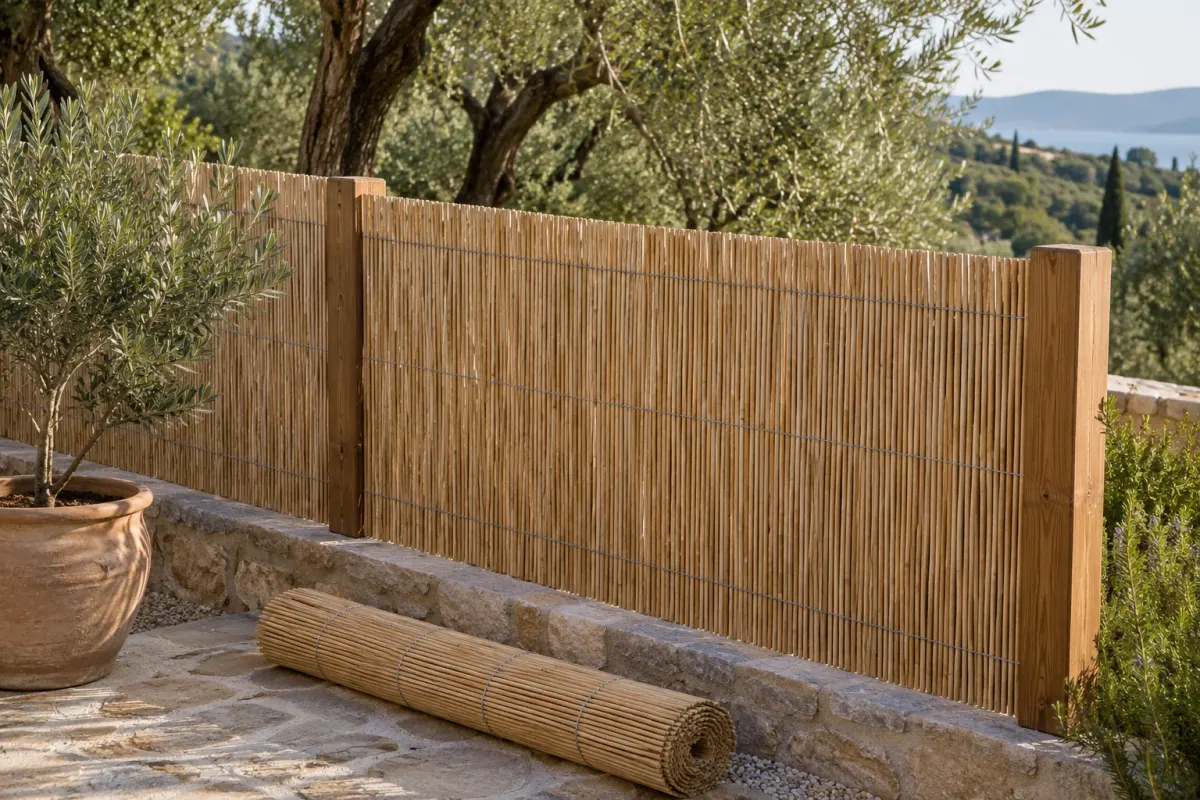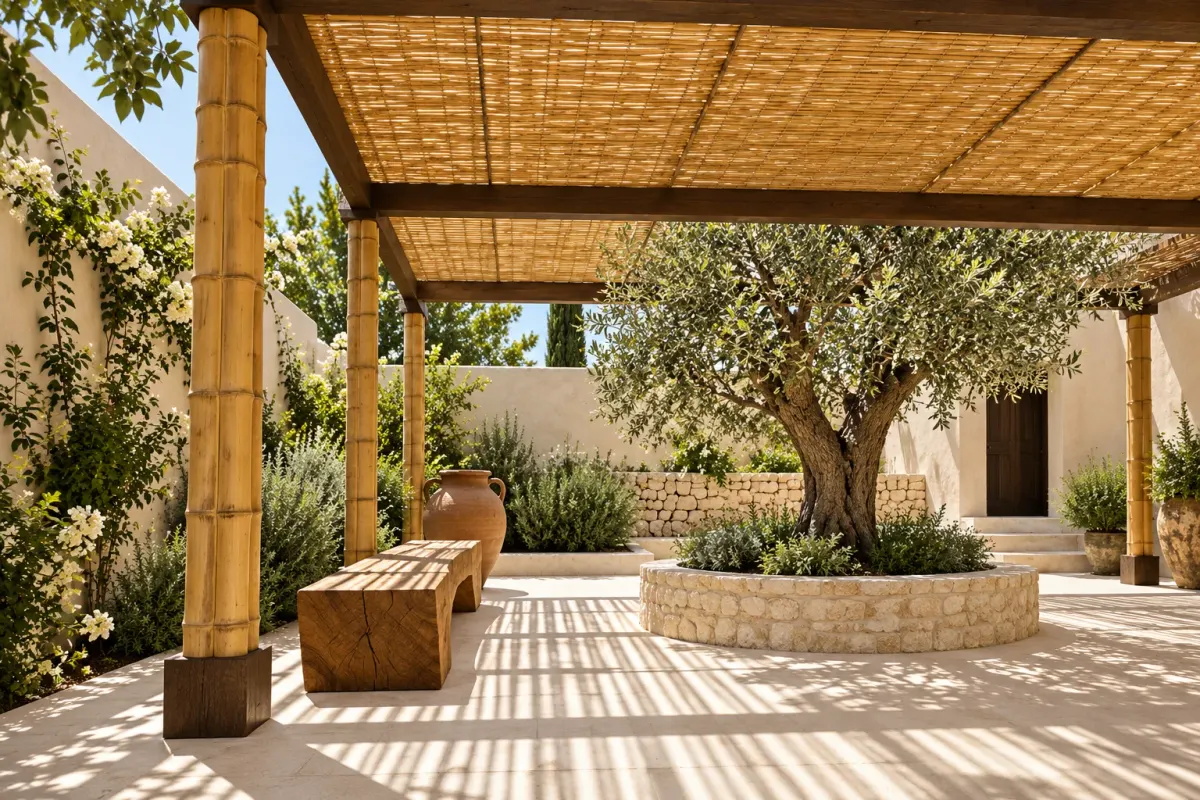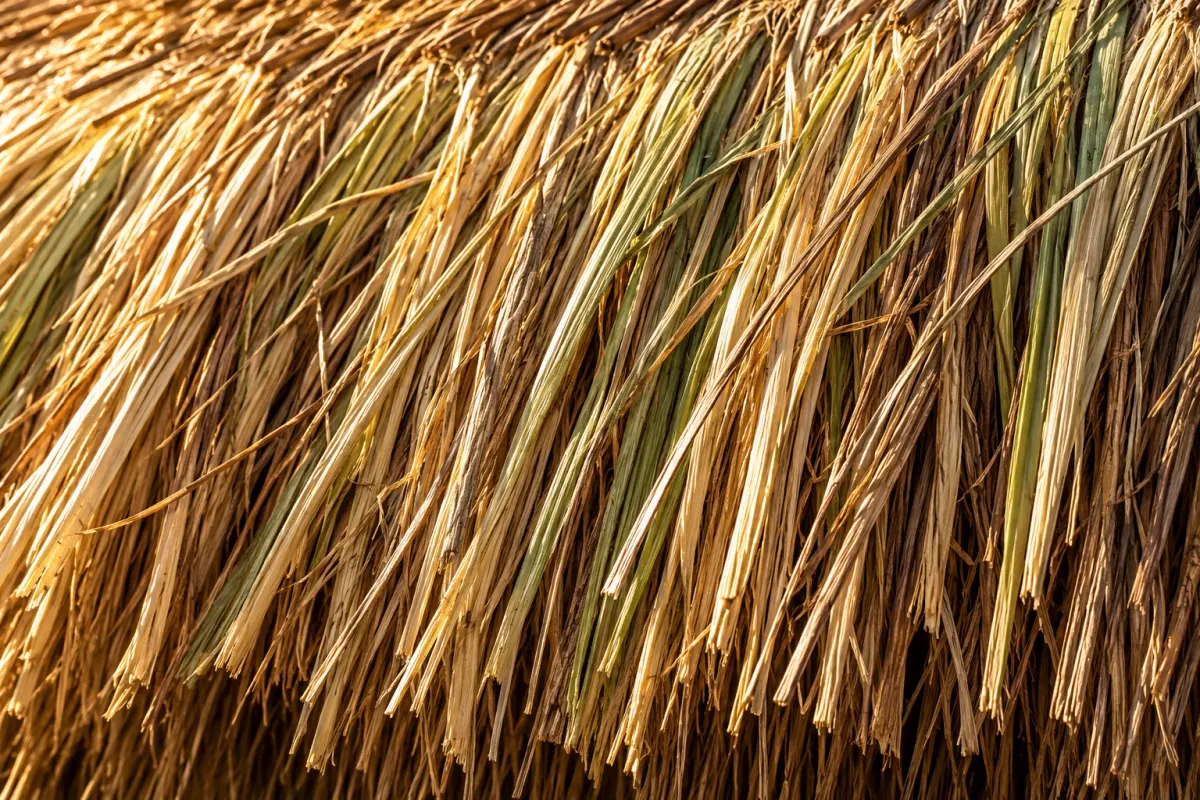
In short: The colour of natural material is not fixed; the tone of the first day softens with sun, moisture and use. Knowing this from the start makes it easier to choose the right sample and set expectations.
Why does colour change?
Reed, woven mat and bamboo are plant fibres. Sunlight can lighten the colour of these fibres over time or move it to a silvery tone. Moisture, dust and the intensity of use also affect the look of the surface.
The speed and manner of change depend on the material, the space and its orientation. A surface that sees a lot of sun and one in shade may not age at the same pace.
Seeing ageing as beauty
The appeal of natural material comes from the character it gains over time. The warm, bright tone at the beginning may give way to a calmer, more balanced look. Some users see this as the space blending into nature.
Still, not everyone has the same expectation. It is therefore important to know from the start that change is not a flaw but a natural property of the material. No exact timeline or result for the change can be predicted.
What to look at when choosing a sample
- Examining the sample both in daylight and in shade
- Knowing that different batches of the same material may differ in tone
- Looking closely at the texture and fibre structure
- Considering the sun direction of the area where it will be installed
For a more detailed reading of the material, see our post on reading the material up close.
The link between colour and care
Regular cleaning can reduce tone differences created by dust and build-up on the surface. For the care approach, see our post on maintenance and renewal. To discuss your colour expectations through options such as the reed roof and bamboo pergola, you can reach us via the contact page.
Designing together with colour
The tone of natural material, which changes over time, gives a more harmonious result when considered together with the other materials around it. The colour of stone, timber, textiles and plants forms a whole with the tone of reed, woven mat or bamboo.
- Seeing the surrounding floor and wall colours together with the sample
- Thinking about how furniture and textile tones match the natural fibre tone
- Examining how lighting shows texture in the evening hours as well
It should be remembered that light changes colour perception; a tone that looks warm in daylight may be perceived differently under artificial light. It is therefore useful to see the sample both by day and in the evening. These notes are general suggestions; the final look varies with the space.
In summary
The colour of natural material is alive: it changes over time with sun, moisture and use. Seeing this change not as a shortcoming but as the character of the material, and examining the sample in different lights, is the easiest way to set expectations correctly. The speed and manner of change vary by space, so no exact time or result can be stated. You can share your colour expectations with us and we can assess them together.
In some spaces there may be a wish to keep the lively tone of the first day; in that case the care approach and expectations should be discussed together. Stopping change completely may not be possible with natural material, but when needs are shared from the start, options are assessed more clearly. We can discuss this openly on the visit.
Frequently asked questions
Can I prevent colour change?
Natural material changing tone over time is expected. We do not promise to stop change completely; we can discuss your expectation during the visit.
Will the sample and the installed surface look the same?
A sample gives a good idea, but the light of the space, the material batch and the installation can lead to a different look.
Is an aged look considered a flaw?
Natural ageing is a property of the material. If your expectation is different, sharing it at the start helps us guide the choice.