Woven mat on a wall: softening the surface
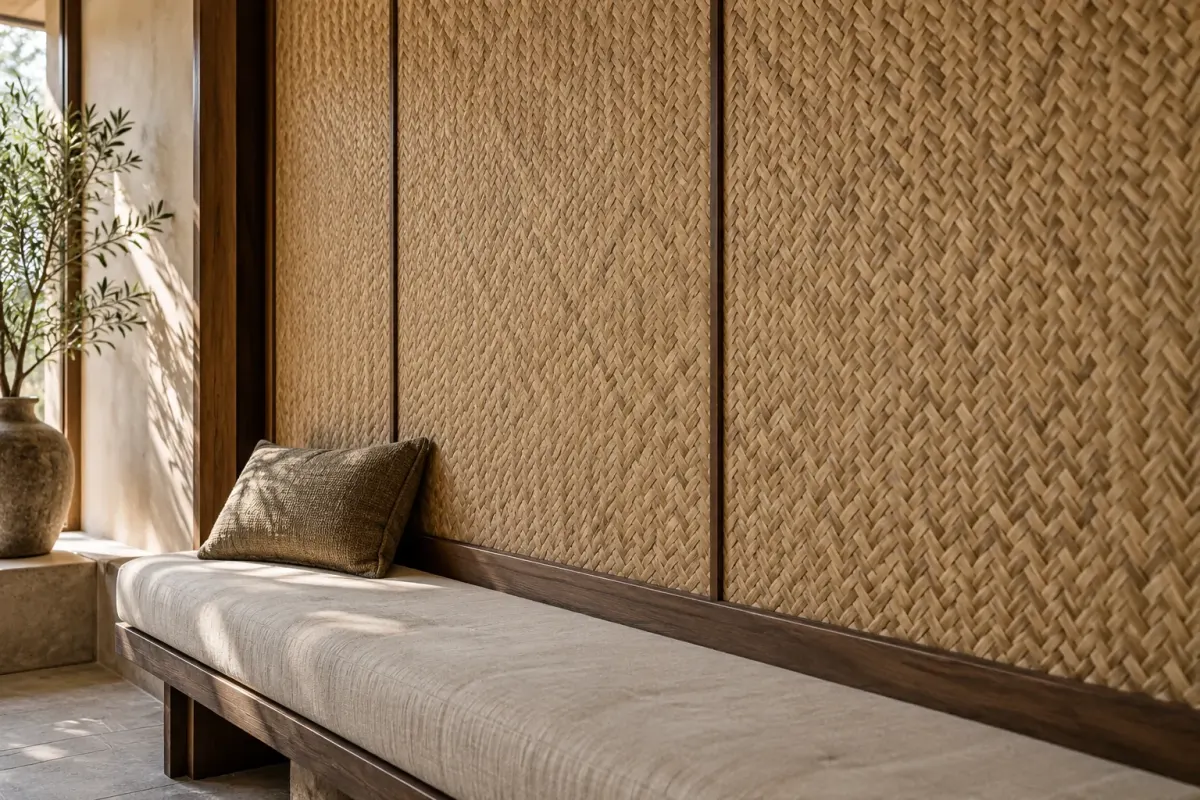
Woven mat wall cladding softens a flat, hard surface with a natural texture. It is used to bring warmth into spaces such as a bar back, a restaurant wall, a lounge corner or an entrance corridor.
As the woven mat wall and panel page shows, the success of the surface depends on panel size, pattern direction and the edge solution being set up together.
Pattern direction and joints
The weave can be applied horizontally, vertically or diagonally. Direction changes the perceived height and width of the space: a vertical weave can suggest height, a horizontal one width.
Panel joints are the most visible detail. Aligned joints make the surface look like one piece; a deliberate gap can be part of the design. Which one is wanted should be decided in advance.
Perimeter trim and finish
The trim around the panel both protects the edge and gives the cladding a frame. The color and profile of the trim can be chosen to match the natural tone of the mat or as a deliberate contrast.
Corner returns, openings for sockets and switches, and junctions with the ceiling and skirting should also be planned in advance. When these details are solved afterwards, the order of the surface can be disturbed.
Thinking together with light and shade
A woven mat surface on a wall shows its texture more strongly when light arrives at a raking angle and looks flatter when light comes straight on. So which wall the panel goes on, the direction of the lighting and the position of windows are assessed together. Light from the side brings out the weave, while soft light falling from the ceiling lights the surface evenly.
Furniture and decor placed in front of the wall also affect how the surface is perceived. Since the mat itself carries a strong texture, keeping the surrounding materials plain often gives a more balanced result. In the design this balance should be thought through across the whole material palette.
The evenness of the wall also affects the result. A panel applied to an uneven or rough surface can leave gaps at the joints. For this reason the condition of the wall is checked before installation and, if needed, the surface is leveled with a backing or batten system. This preparation is invisible but decides how even the result is.
Wet areas and heat sources
For wet areas, heavy steam, or surfaces near heat sources, product suitability must be examined separately. A natural-fiber surface can be sensitive to splashing water and high humidity, so the way the space is used is considered when the location is chosen.
To share a photo and dimensions of the wall, the quote form can be used; details are settled in the survey before installation.
In places where the surface will be touched during use, for example behind seating groups, how the mat will behave in terms of wear and soiling should also be considered. If needed, a more durable finish or a protective batten can be preferred in these zones.
Frequently asked questions
In which direction is a woven mat wall panel applied?
Horizontal, vertical and diagonal applications are possible. Because direction changes how the space is perceived, it is chosen according to the design intent.
Can panel joints be hidden?
Joints can be made less visible through panel size and weave direction; hiding them completely may not be possible with every material. Alignment and perimeter trim are decisive here.
Is it suitable for areas such as bathrooms or kitchens?
For wet areas and places near heat sources, product suitability must be examined separately. In such areas the decision should rest on a sample and technical information.