In brief
In places where people stay long, such as cafes and lounges, the effect of texture and light is very strong. In this article we gather in plain language ways to use woven mat ceilings, wall panels, bamboo screens and natural surfaces in balance indoors, the relation of light to texture and practical matters such as cleaning. The aim is to add warmth without weighing the space down. The notes offer a general frame; the scope for each space becomes clear at the survey according to its own conditions. We kept it short: each section answers one question, and a three-question FAQ closes the article.
Why does texture matter indoors?
In places like cafes and lounges, people stay for a while. So whether surfaces feel and look relaxing affects whether guests choose the place again. Flat, glossy surfaces give a quick first impression; natural texture builds an atmosphere that warms with time.
Texture is not only a visual ornament; it filters light, can soften sound to a degree and gives the space character. Since light and sound effects vary with the material and the application, it is worth clarifying expectations from the start.
The ceiling: the surface light filters through
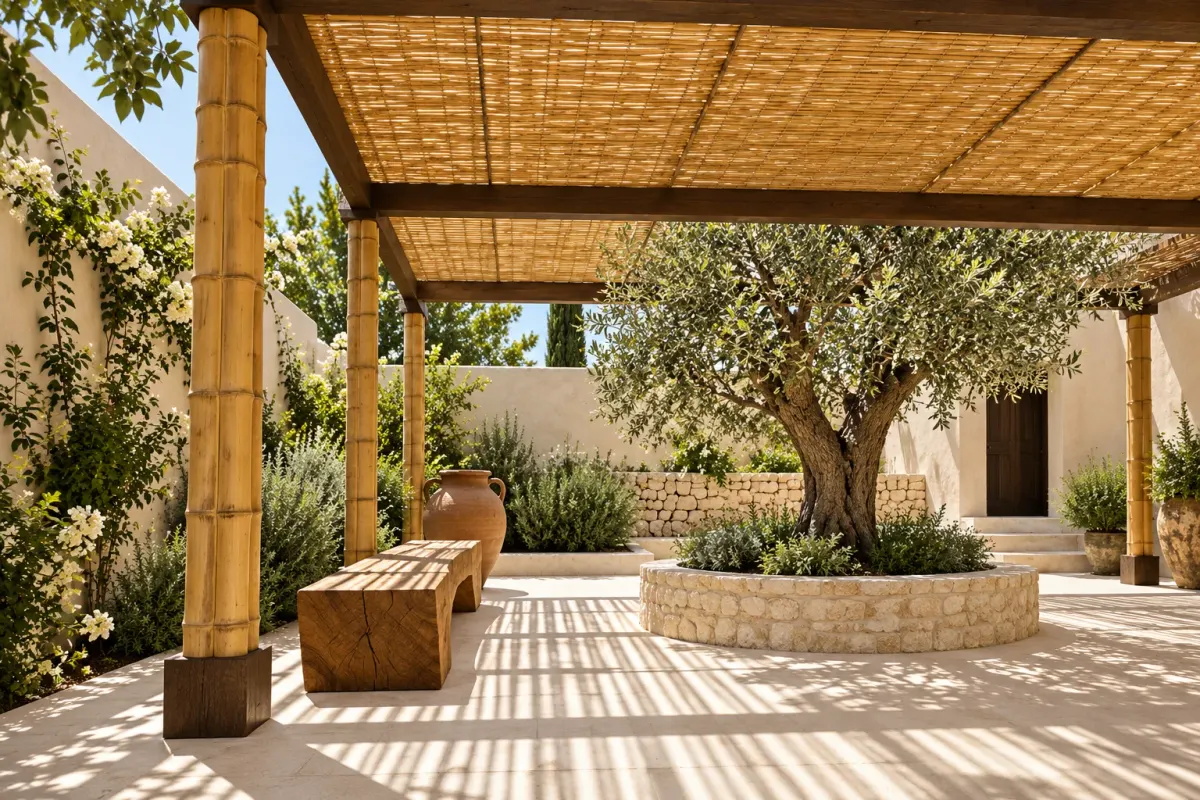
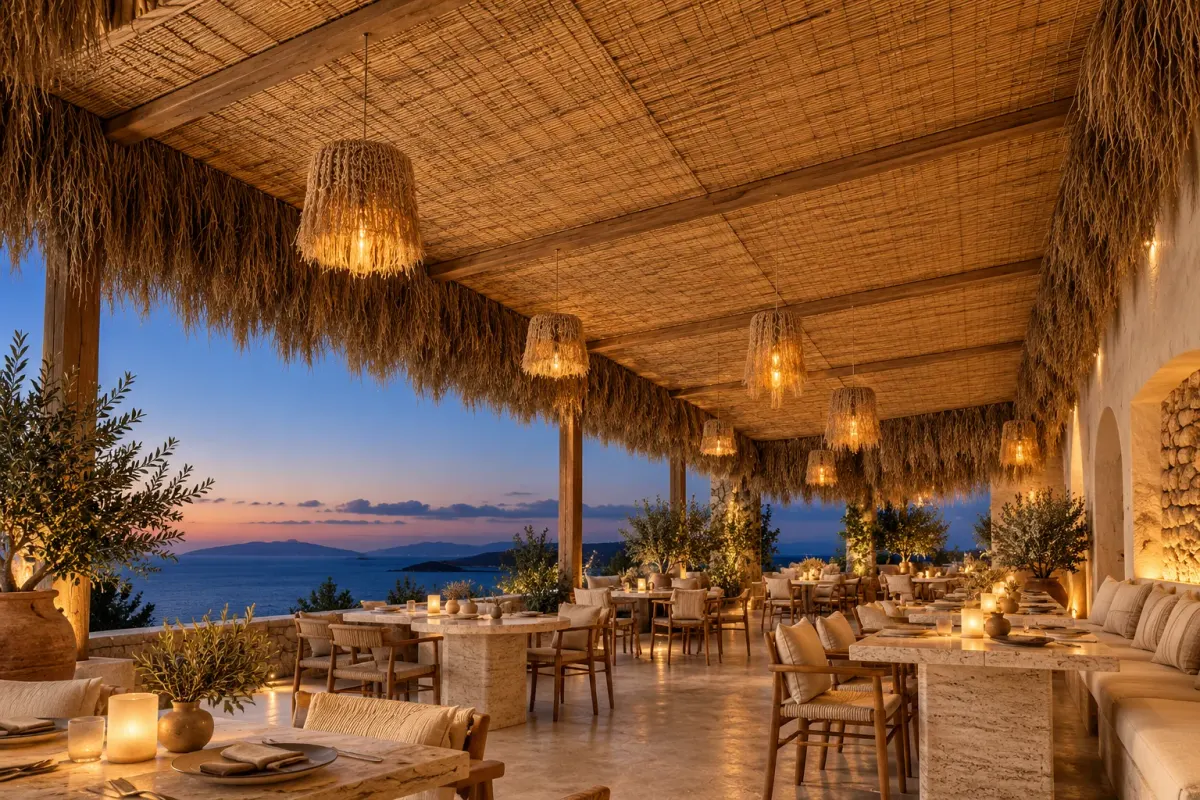
Indoors the ceiling is often overlooked, yet much of a lounge atmosphere comes from it. A woven mat ceiling passes light through a soft texture and wraps the seating in a warm tone. Directing lighting at the ceiling texture gives diffuse light instead of bright spots.
Ceiling height and existing installations set the limits of this application; they are assessed together at the survey.
Walls, niches and dividers
Wall panels and niches
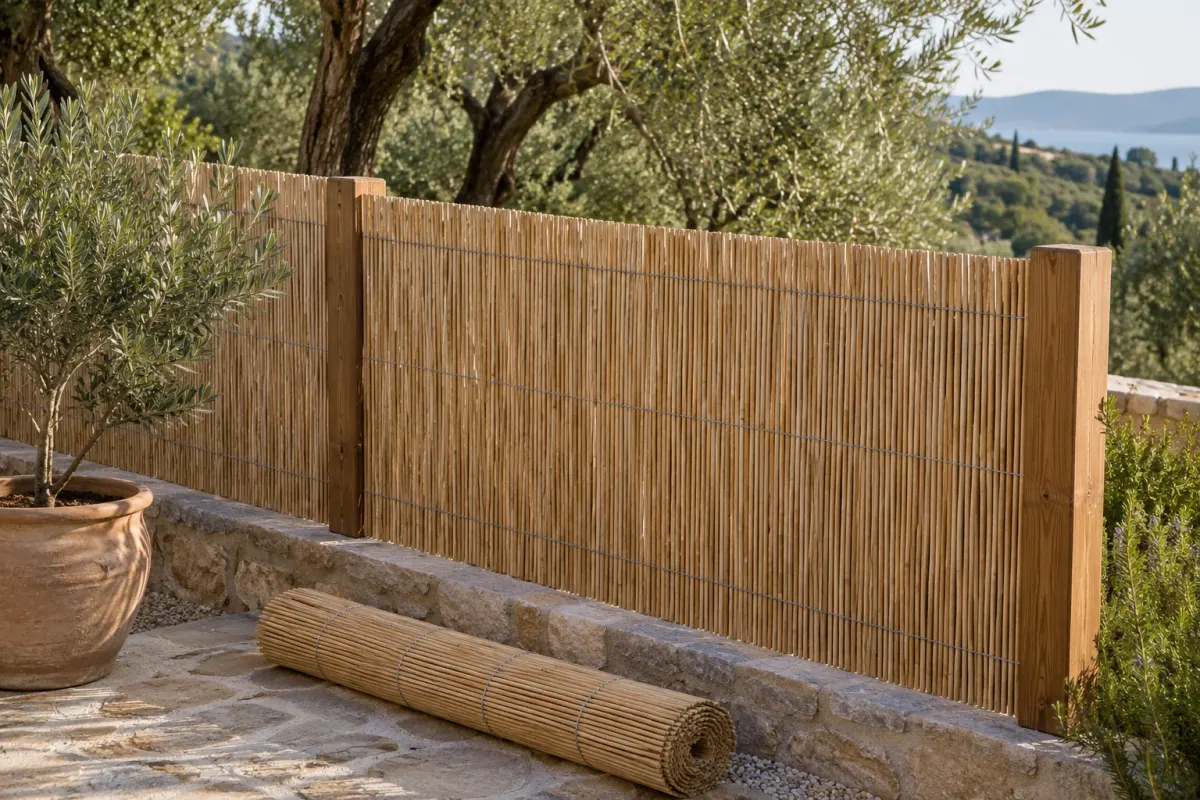
Woven mat wall panels and decorative bamboo surfaces change the character of a wall or niche. Choosing a single accent surface rather than covering every wall adds texture without tiring the space.
Zone dividers
Bamboo screens can divide a large hall into zones without building walls. The division is light, permeable and changeable.
Cleaning and ease of use
In a cafe, surfaces are cleaned every day and touched often. When choosing natural material, separate which surfaces are open to touch and which sit at heights that are hard to reach. Ceiling and high wall details can be textured, while surfaces at seating height are expected to be easier to clean.
Near the kitchen, grease and steam must also be considered. So when choosing where to apply, the venue's operating pattern should be seen; surface choice, care habits and expected look should be discussed together.
Use natural material in balance indoors
Natural texture is strong; used too much, a space can become heavy. Balancing with furniture, flooring and metal details lets the natural surface stand out. Conditions indoors differ from outdoors, but humidity, heat and cleaning expectations should still be discussed at the survey.
Share photos of your space to begin the survey and consultancy step and create a quote request.
Frequently asked questions
How does a woven mat ceiling affect light indoors?
The woven surface filters and softens light; the degree varies with weave density and lighting direction. Seeing it on a sample is the most reliable way.
Do I need to clad every wall in a cafe?
No. Adding natural texture with one accent surface or a niche often gives a more balanced result.
Does an indoor application absorb sound?
Natural surfaces can soften sound to a degree, but this is not a promise of an acoustic solution. If acoustic performance is expected it must be handled separately.