Why reed fencing is chosen
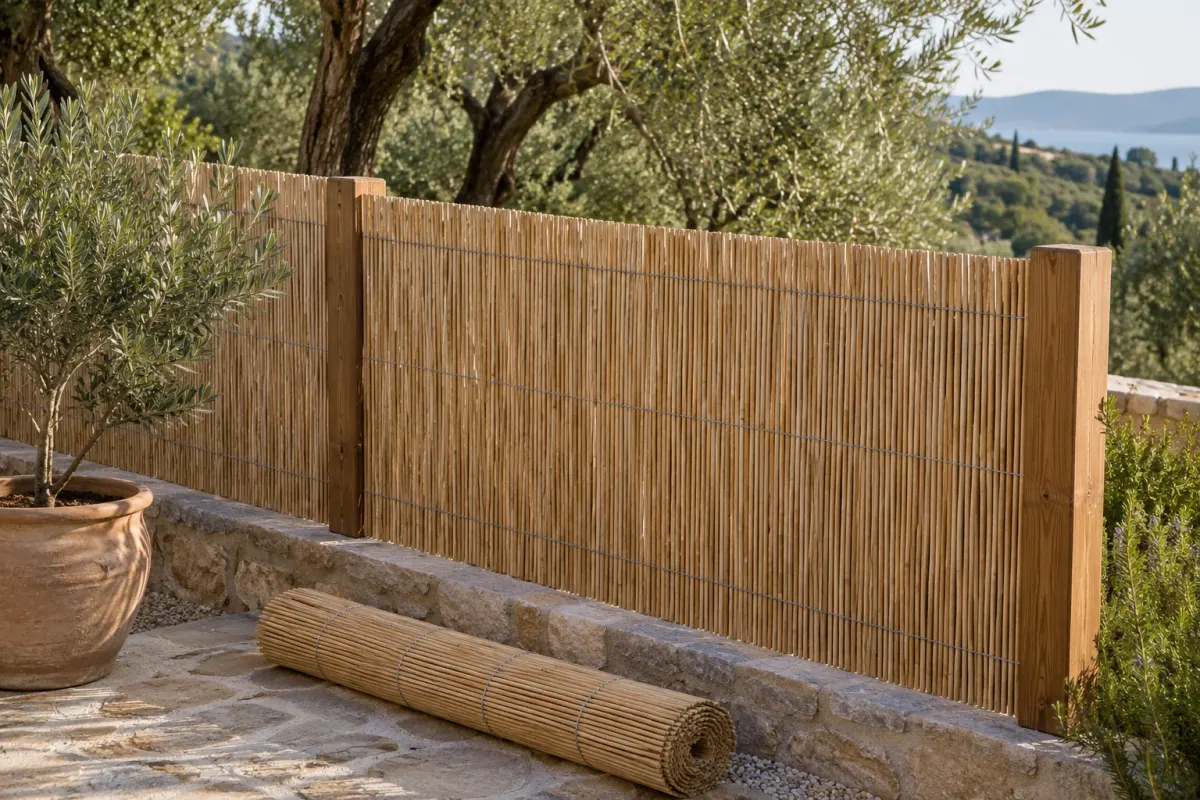
Reed fencing and rolls are a natural solution for enclosing a garden, terrace or beach area and adjusting the view. Coming in rolls makes it easier to install over long distances and on existing railings.
As stated on the reed fence and roll page, the existing railing or support is examined before installation, because the structure that carries the fence largely determines how it behaves.
Visibility
The spacing of the reed stems sets how closed or how open the fence will be. A dense arrangement gives privacy, a sparse one lets view and air through. The choice follows the purpose of the space.
For this reason holding a sample in the hand is not enough; if possible it should be viewed from the distance where the fence will stand, and in the light. When the sun is behind it, transparency is perceived differently.
Wind and fixing spacing
A closed surface presents an obstacle to the wind and loads the structure. This effect should be considered when choosing roll height and fixing spacing. In exposed areas, a more open build with closely spaced fixing points can be better balanced in terms of load.
Planning an edge finish that reduces moisture build-up at points touching the ground helps keep the natural material looking good.
Height, continuity and surroundings
Fence height sets both privacy and the relationship with the surroundings. A tall fence draws a strong boundary; a low one defines the area without closing the view. In different settings such as gardens, terraces and beaches this balance is struck differently.
Whether the fence stays continuous along the line also matters. If gates, passage gaps and corner returns are planned in advance, the reed roll reads as an uninterrupted and even surface. If there are existing plants or trees, the fence line is assessed together with them, so the natural material settles more harmoniously into the surroundings.
The maintenance approach of the fence should also be thought through from the start. Natural reed can change tone over time with sun and weather; this is often part of the natural aging of the material. Building the fence in a modular or easily accessible way so that a damaged section can be renewed can be a practical choice in the longer run.
Support and edge finish
If an existing railing or wire mesh is to be used, its condition and dimensions should be examined. If a new frame is needed, it becomes a visible part of the design. Finished top and side edges keep the fence looking clean.
To share a photo of the area and the fence-line dimensions, the quote form can be used; for questions, the contact page.
If the ground line along the fence is uneven, the bottom edge of the roll should be planned to follow this slope. Otherwise gaps can appear along the bottom line. During the survey, ground slope and obstacles are also noted so that the fence line is drawn according to real conditions.
Frequently asked questions
Is there a difference between a reed fence and a roll?
A roll is reed supplied wound in a long strip, which makes it easier to install along long lines. A fence is those elements set up along a line; the two words often describe the same application.
Can reed fencing be used in a windy area?
It can, but a closed surface creates wind load. Roll height, openness and fixing spacing should be chosen with this effect in mind.
Can it be applied to an existing railing?
That depends on the condition and dimensions of the railing. The existing support is examined before installation and, if needed, reinforcement or a new frame is assessed separately.