In brief
In hotels and resorts, natural material gains meaning not in a single corner but along the whole route a guest walks. This article offers a short roadmap on how reed, woven mat and bamboo can be used in a consistent language from beach to lobby, how they relate to scale and landscape, and why planning care from the start matters. It can be a good first step toward seeing your property as one whole. The notes offer a general frame; the scope of each property becomes clear at the survey according to its own conditions. We kept it short: each section answers one question, and a three-question FAQ closes the article.
A property is a walking route
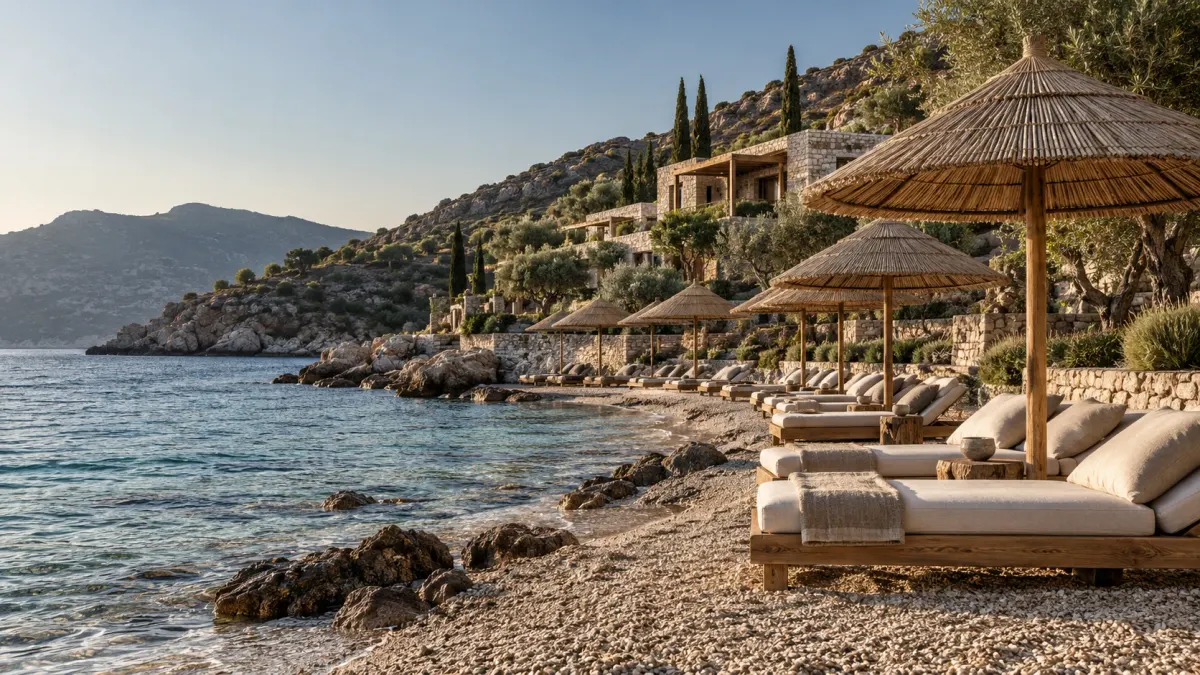
A hotel or resort reads like a route a guest walks: from the entrance to the room, from the pool to the beach, from the restaurant to the bar. Natural material acts as a shared language along this route. Repeating a few materials instead of using a different one at every point strengthens the identity of the property.
Before you begin, draw a bird's-eye plan of the property and mark which areas are open and which are semi-covered. The points that need shade decide which surfaces the material will be used on.
The role of the material changes with scale
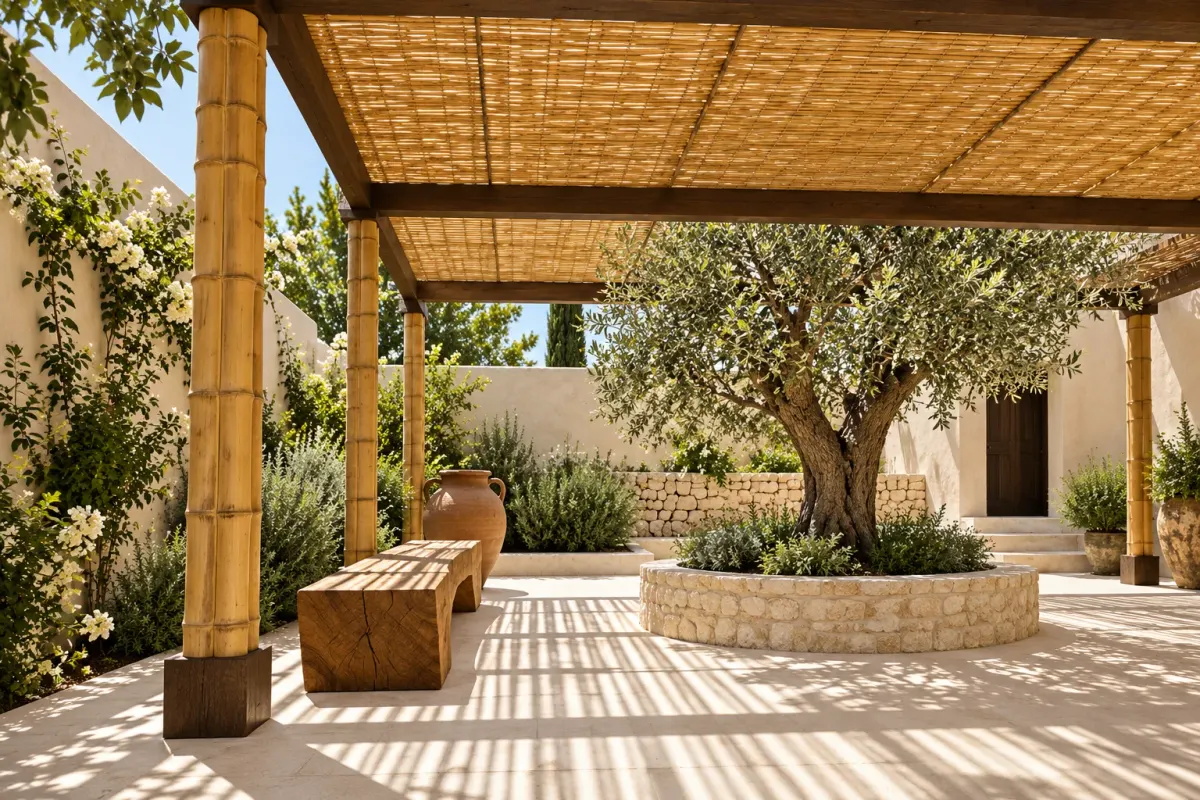
On the beach a wide reed roof silhouette can take the lead; in the lobby the same material may only need to appear as a small woven mat detail. As scale changes, so does the role: outside it is shade and silhouette, inside it is texture and warmth. Setting up this transition deliberately keeps the parts of the property from feeling foreign to each other.
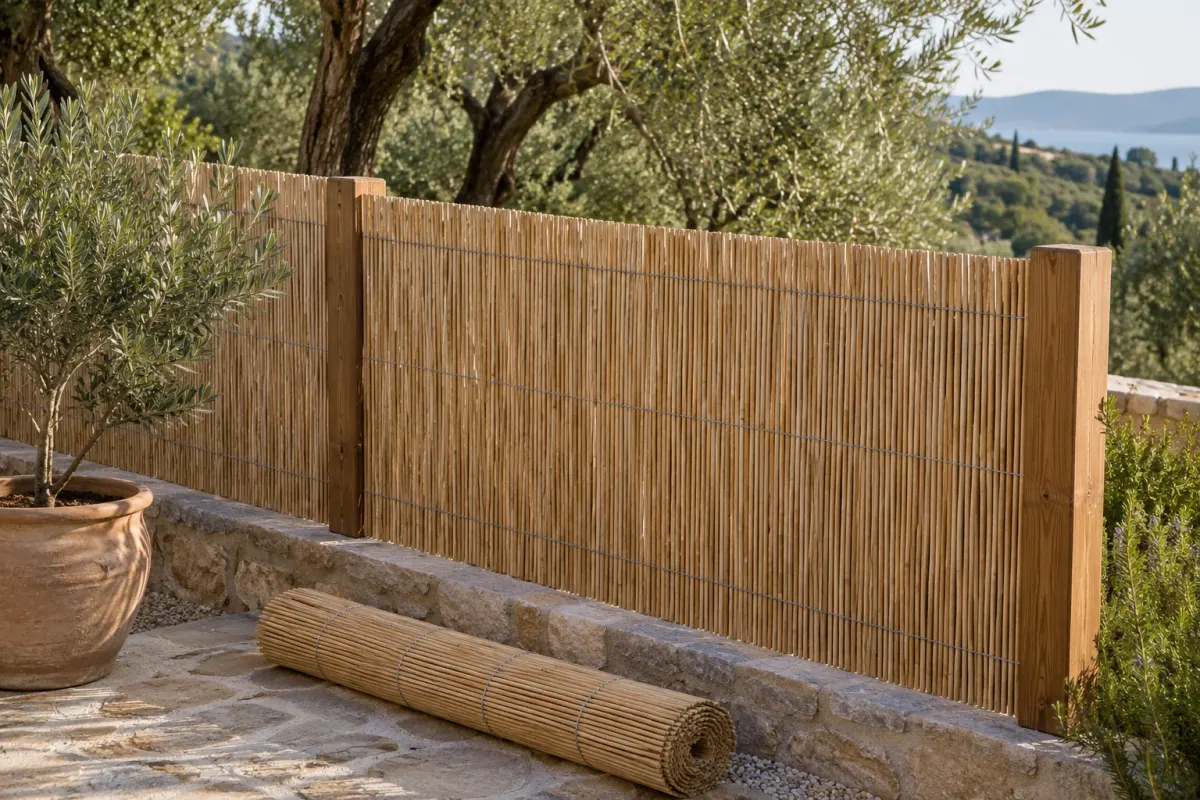
Pieces such as a reed roof around the pool, a woven mat ceiling in shared areas and a reed fence at garden edges can take on different functions within the same natural palette.
Think together with the landscape
Existing planting
Existing trees and plants are the strongest reference for shade placement. Positioning a new structure with them rather than in place of them supports both the look and the coolness of the space.
Lighting and the evening look
Natural surfaces reflect light softly. In areas used in the evening, designing the lighting plan together with the material gives a consistent atmosphere at night as well as by day.
Divide the decision into stages
A large property does not have to be renewed in one go. Taking on the area where guests spend the most time, such as the pool surroundings or the beach entrance, and seeing the result gives a clear reference for later stages. If each stage continues the language of the one before, the property gradually becomes whole.
In staged work the rhythm of the business must also be considered. Talking in advance about which area will be closed to use and when protects both the guest experience and the order of the application. This planning is done together during the survey.
Plan maintenance and renewal from the start
In heavily used properties, how natural material ages and how it will be looked after is part of the design. Easily reachable connections, replaceable parts and regular checks help the application stay in good condition. These details are handled separately under maintenance and renewal.
To describe the scope of your property, reach us via the contact page or create a quote request.
Frequently asked questions
How do you keep materials consistent in a large property?
Choosing three or four materials and repeating them at different scales across areas is enough. A bird's-eye plan and a survey make this choice easier.
Can reed, woven mat and bamboo be used together in one project?
Yes. For harmony, colour tone, texture density and which surface each material takes should be considered from the start.
Can an application be added to an existing property later?
Existing surfaces and supports are examined at the survey; whether it is feasible and its scope become clear on site.