In brief
The poolside is the most photographed and most-lingered-in place of a hotel or villa. In this article we explain in short notes how to position shade beside the water, what a reed-roofed pavilion is for, what to watch on wet ground and how small details change the feeling. Observing the site first and choosing the material afterwards is the right order. The notes offer a general frame; the scope of each poolside becomes clear at the survey according to its own conditions. We kept it short: each section answers one question, and a three-question FAQ closes the article.
Plan the water and the shade together
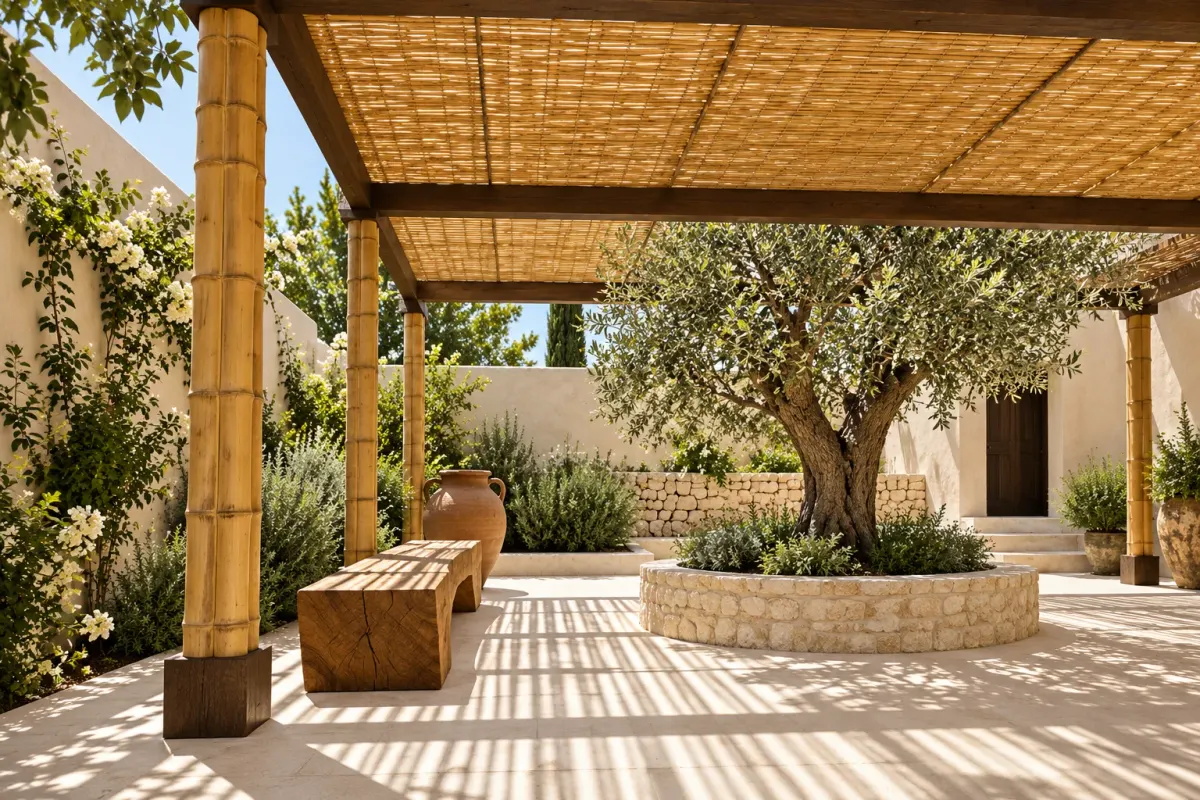
Poolside, two things seem to compete: water and shade. People want to look at the water but also avoid the sun. A good layout places shade where it will not block the view of the water. Shade structures set parallel to the pool edge protect the view while defining the seating area.
The sun's movement changes the direction of shade at the edge. Taking a short sun note for morning, noon and late afternoon makes it easier to get the placement right.
The pavilion: the stage of the poolside
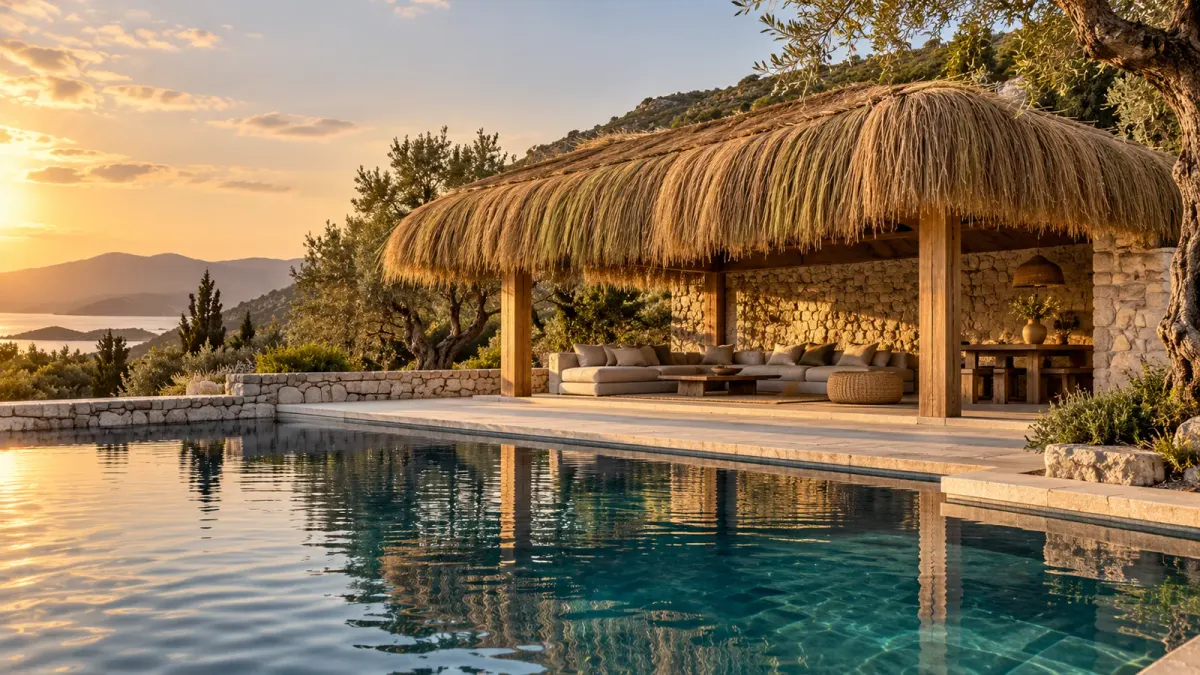
Around a pool, a reed-roofed pavilion can be both a resting point and a visual focus. A structure open on all sides does not cut circulation around the pool. When a gazebo is considered together with a reed roof, it reads like a stage belonging to the garden.
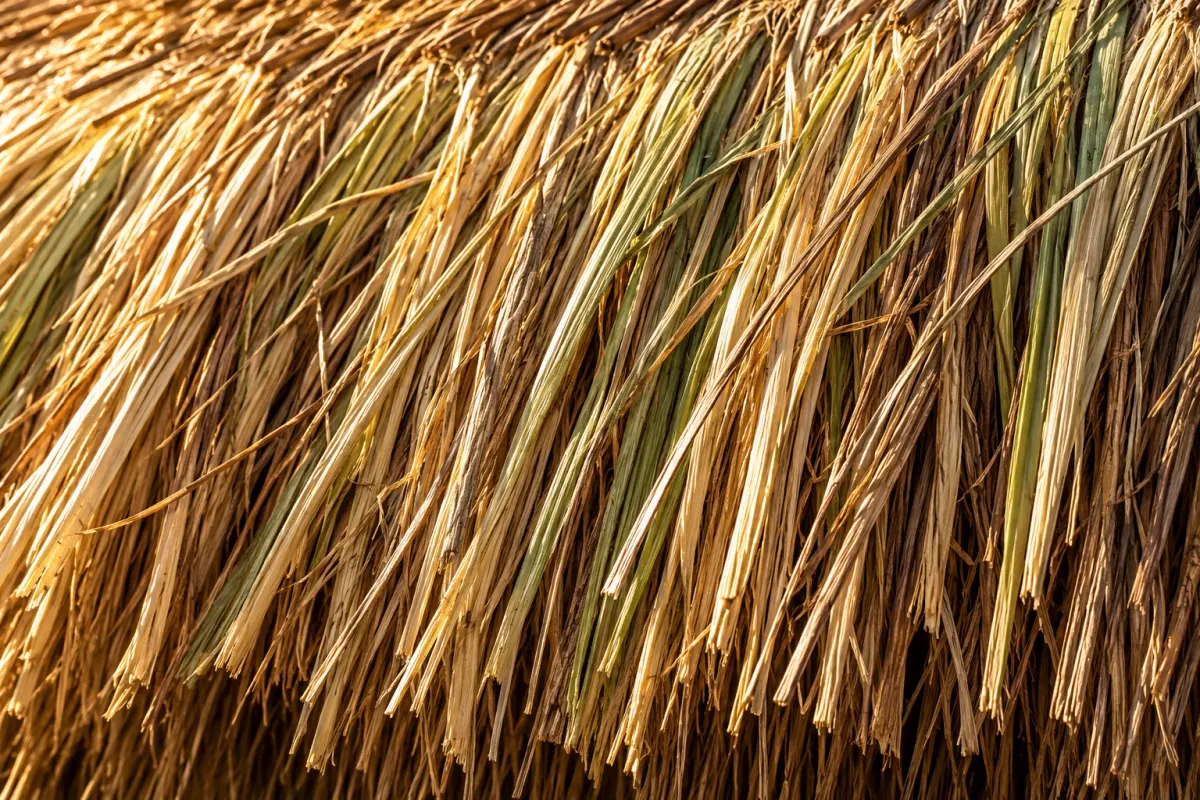
Fringe length and roof pitch affect how deep the shade falls. These details are set at the survey according to the size of the area.
The edge and the ground
Wet areas and circulation
The area around a pool is wet. Support post positions, non-slip flooring and passage width must be evaluated separately at the survey for safety. The design is built on top of these practical needs.
Soft boundaries
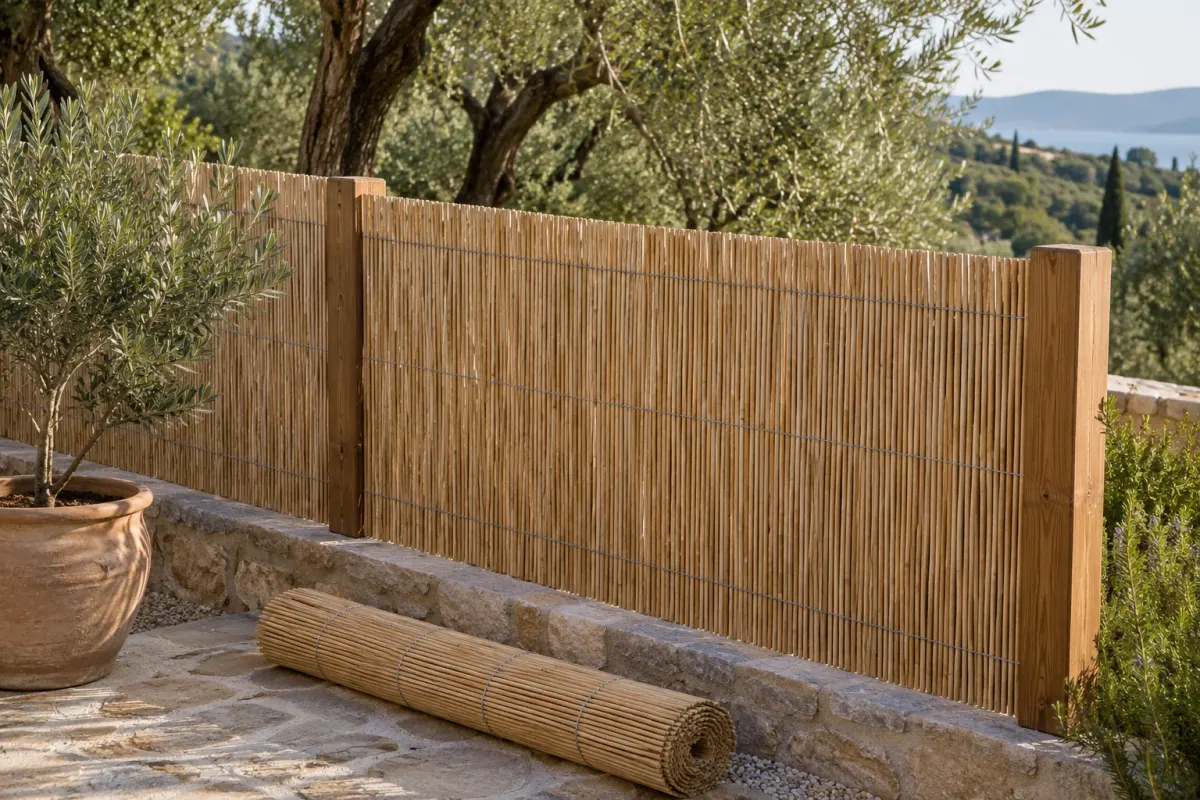
On edges facing the garden, a reed fence or bamboo screen gently separates the pool area from its surroundings and adds privacy.
Seating layout and groups
Poolside loungers can be lined up in rows, but when placed in groups they set up a social order. Two loungers and a side table can be thought of as a small unit; each unit gets its own shade, each shade its own direction. This approach keeps a sense of privacy even on crowded days.
Shade units do not have to be fixed. Considering a fixed pavilion in some areas and movable umbrellas in others helps both flexibility of use and seasonal change. Which approach fits the site is decided at the survey after seeing the size of the pool and how it is used.
Small details create a big feeling
The direction of loungers, the position of side tables, a bar point or a daybed cushion make a poolside distinctive for a hotel or villa. Begin by imagining the user: who will be here, when and for how long?
Send the dimensions and photos of the area to begin the survey process, then leave a quote request.
Frequently asked questions
Which shade structure suits a poolside?
A reed-roofed pavilion can be considered if the focus is a resting point, and umbrella clusters for a wide area. The choice is set according to the size and use of the space.
Does a humid environment affect natural material?
Humidity, sun and use conditions can affect how natural material looks. So the application and care approach are assessed together at the survey.
Is the poolside in the image a completed project?
No. The image is an architectural concept of a reed-roofed pavilion and a pool; it is not presented as a completed project.