In short: A natural material structure works more evenly when designed around the sun and wind of its location. Effects differ by region, so the space is assessed on site.
The direction of the sun shapes the shade
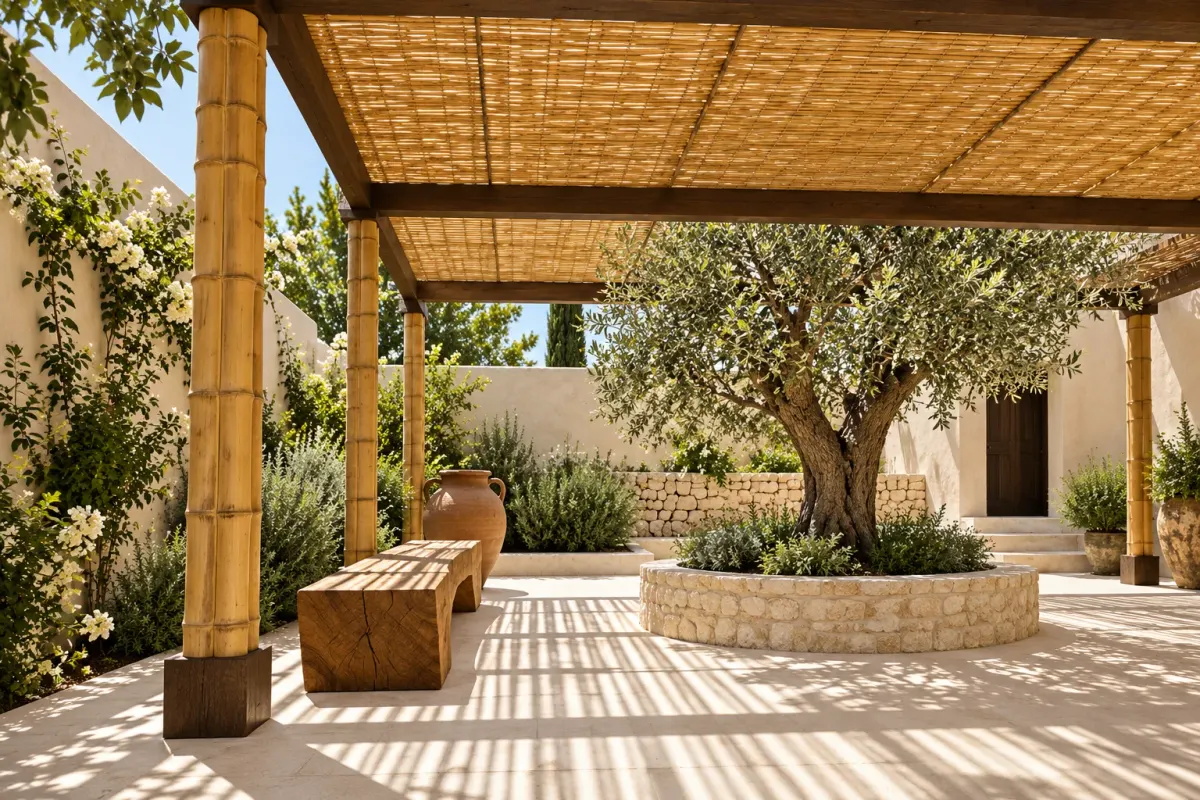
The angle of the sun changes through the day; cool mornings and strong afternoon light create different needs in the same space. Knowing at which hours the shade will be used helps decide placement and fringe length.
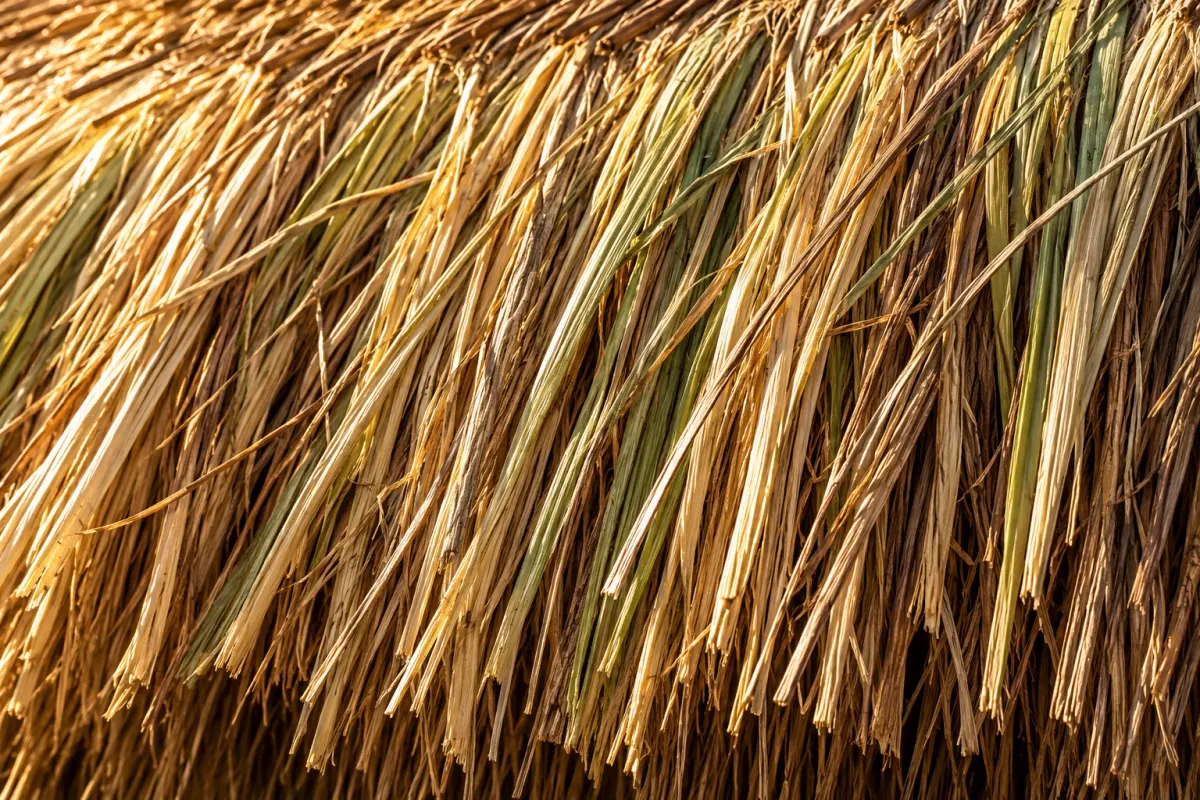
Direct sun can soften the colour tone of the material over time. It is a good approach to allow from the start for surfaces that see constant sun and surfaces that stay in shade to age differently.
Taking the wind into account
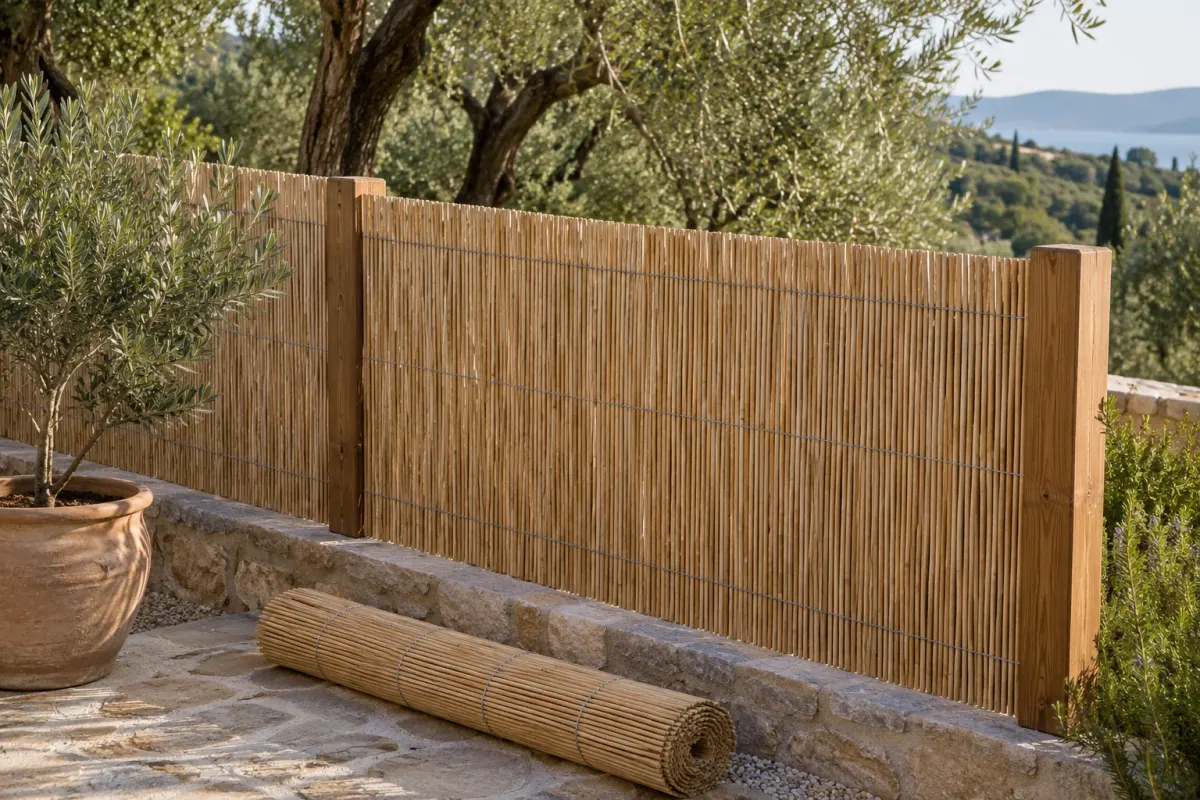
The prevailing wind direction affects how umbrellas, fringes and light covering surfaces behave. In open coastal areas the wind effect can be more noticeable.
- Connection details receive extra attention on wind-exposed surfaces
- The supporting and fixing solution is chosen to suit the space
- Protection is considered for hanging fringes and light parts
There is no general rule here; wind data and how open the space is are assessed during the visit. For shade types, have a look at the reed umbrella and gazebo pages.
Seasonal change and moisture
The difference between summer heat and winter humidity can make natural fibres swell and shrink slightly. It therefore helps to think of joints that allow some movement and to review the space at seasonal transitions.
A short check at the start and end of the season lets small changes be noticed early. For detail, see our post on the maintenance approach.
Summary for planning
Coming to the visit with notes on the direction of the sun, the wind and the seasonal use speeds up the design. You can send us these through the contact page. These notes are general information; the effect on each space is assessed project by project.
Small observations make a big difference
Before the visit, you can make a few simple observations in your own space. Taking photos from the same point in the morning, at noon and in the evening shows where the shade falls. Noting at which hours and from which direction the wind blows most is also valuable data for design.
- The points that get the most sun and stay the coolest during the day
- The effect of wind on light items such as umbrellas or curtains
- How the space is used in rainy and hot periods
- The shade contribution of nearby trees and buildings
These observations help set the size of the shade and the placement of the fringe and supporting structure more accurately. They are general tips and do not replace a design decision; the real assessment is made space by space.
In summary
Sun, wind and seasonal change are three main factors that together affect the placement, form and care of a natural material structure. Observing them from the start helps make the design both more comfortable and more balanced. Because the effect differs for every region and every space, what is described here is general information only and carries no firm prediction of results. You can ask for an assessment of your space.
Frequently asked questions
Does the sun change the colour of the material?
Natural materials may change tone over time with the sun. The speed and manner of change differ with the space and the material.
Can installation be done in windy areas?
Installation is possible in wind-exposed areas too, but the supporting and connection solutions are assessed separately for the conditions of the space.
Which direction is best for the structure?
There is no single right direction. The decision is made by considering hours of use, the view and the surrounding buildings together.